
The Echo
A Short Story from the Uncanny Valley

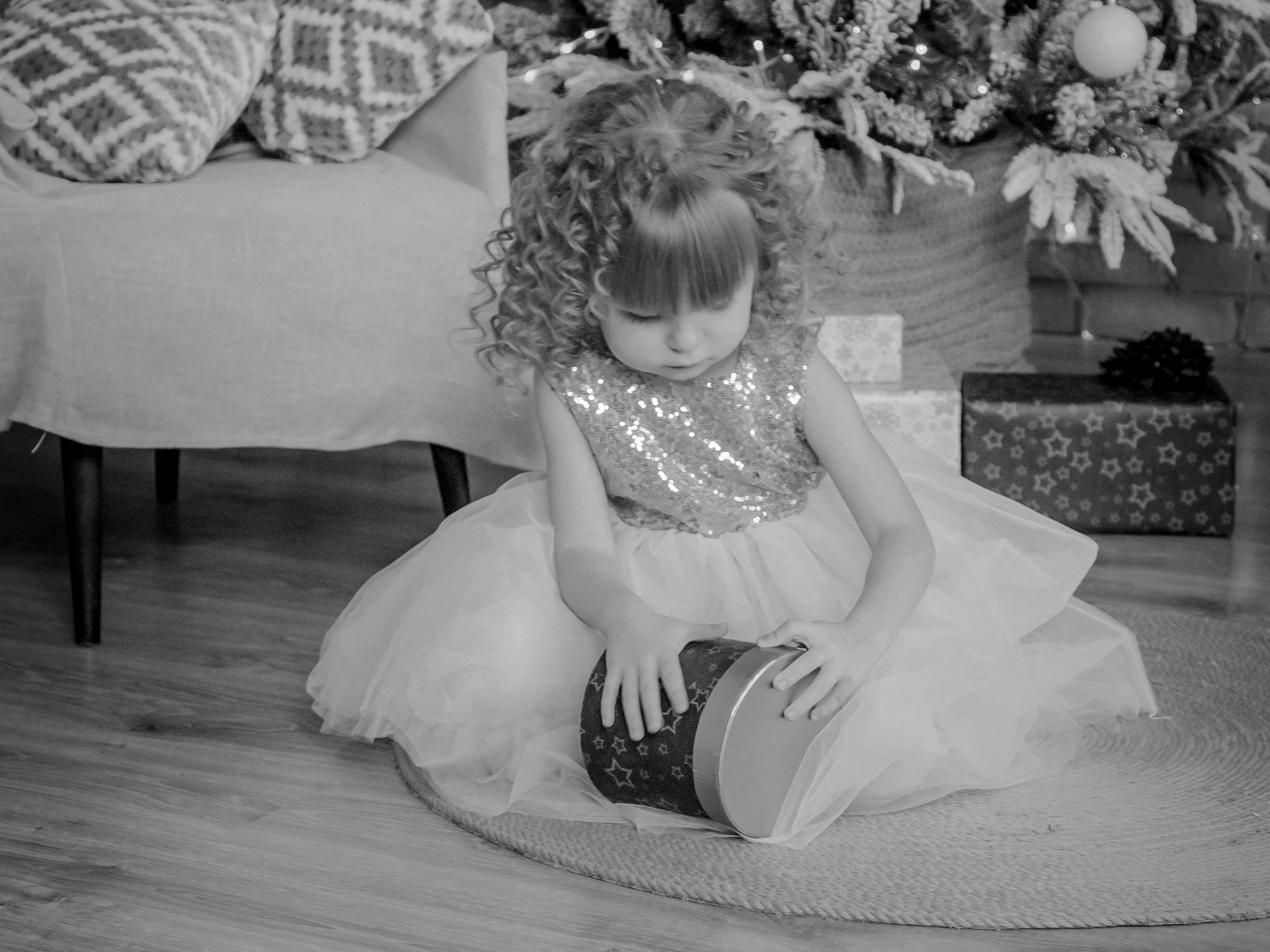
The silence arrived six months ago, an unwanted guest in the space Lily vacated. It occupied her highchair. It slept in her cot. Alex and Eleanor moved through it like deep-sea divers, slow and deliberate, the quiet a roar in their ears.
Grief was a landscape; their house its capital. Alex polished glasses already clean, the squeak of cloth on crystal a tiny scream against the quiet. Eleanor traced the whorls of dust on the mantelpiece, her finger carving a clean, pink trail through the grey film of their suspended lives.
Therapy had been a revolving door of useless platitudes. Their last counsellor, a woman with tired eyes and a faith in bleeding-edge hardware, mentioned The Echo. It came from a tech start-up with a sleek name—‘Aperture Grief Management’—and a controversial mission. The minimalist white box looked more like it held a smartphone than a conduit to the afterlife.
Inside, nestled in foam, was the device: a smooth, black cylinder, no bigger than a Coke can, with a single lens. Alex held the user agreement under the lamp, the paper cool and corporate. He read the primary protocol aloud, his voice flat.
“The imprints are passive recordings. Observation is permitted; interaction—vocal, physical, or otherwise—constitutes a system breach. The firewall between memory and reality must not be crossed. Aperture GM is not liable for psycho-emotional feedback. The integrity of the client’s perceived reality cannot be guaranteed if protocols are violated.” He looked at Eleanor. Her eyes were fixed on the cylinder as if it were a holy relic. “It’s a one-way mirror, El. We can look, but we can’t touch. Or speak.”
“I know,” she whispered, her voice a dry rustle of leaves. “Just…let’s see her.”
They took it to the nursery, a perfect, heartbreaking mausoleum. A mobile of wooden planets hung motionless above the cot. A stack of picture books lay on the nightstand, the top one, about a bear who lost his hat, bookmarked halfway. The air was thick with long-gone baby powder and settled dust.
With shaking hands, Alex placed The Echo on the chest of drawers and plugged it in. A tiny white LED pulsed, a calm, rhythmic heartbeat. He aimed the lens into the room, opened the sleek Aperture app, and pressed ‘Initiate Imprint’.
The device hummed, the LED shifting to a soft, searching blue. A thin beam of light emanated from the lens, not projecting, but probing the space. The app screen displayed a proximity sensor.
“What’s it doing?” Eleanor whispered, clutching her arms.
“Searching,” Alex breathed, his focus locked on the screen. “For the strongest memory trace.”
He panned the device across the room. The beam swept over the empty cot and the hum pitched higher. The LED blinked faster. A flicker of hope. He held it there. The hum faded. False positive. He moved on, the beam caressing the rocking chair, the bookshelf, the changing table. With each pass, the silence deepened, the weight of their hope pressing down.
Then, he aimed it at the circular play-rug in the centre of the room.
The hum jumped, becoming a solid, resonant tone. The blue LED shone with a fierce, steady intensity. On the app, the sensor flared white. A single line appeared: Imprint Locked.
Alex exhaled a breath he didn't know he was holding. "I've got it," he whispered, his voice thick with a terrifying hope. "El... I think I've got her."
The device thrummed, a low vibration in their bones. A cone of faint, blue light projected onto the floor. For a second, nothing. Then, the motes of dust in the beam began to coalesce. Light wove into threads, threads into form, a ghost knitting itself into existence.
And then, she was there.
Lily.
A shimmering, perfect memory made solid. She sat on the rug, silent, ethereal, utterly real. Her hair, the colour of spun honey, caught the impossible light. Her brow was furrowed in concentration as she tried to fit a star-shaped block into a round hole. A memory so specific, so mundane, it broke their hearts again.
This wasn’t a photograph. This wasn't a memory dredged from their minds. She was there. The sight was a brutal, beautiful miracle.
A choked, strangled sound, half-sob, half-laugh, escaped Eleanor. Hot tears streamed down her face, a joyous agony that scoured her clean. Alex stood rigid, his hands clenched, his jaw locked. They were not remembering their daughter; for the first time in six months, they were with her. The cold, calculated technology had delivered its impossible promise. They stood for an eternity, two statues of sorrow feasting on the sight of her.
But the apparition was too perfect. Its silence was a cruelty. Eleanor could see the slight pout of Lily’s lips, the determined set of her shoulders. She could almost smell her—that unique scent of soap and sunshine. A primal, maternal need, older than any user agreement, clawed its way up Eleanor’s throat. It wasn’t enough to see. It was never enough.
“Lily,” she whispered.
The name, a stone dropped into the room's deep silence, hung in the air like a sacrilege.
Alex’s head snapped towards her, his eyes wide. “El, no.”
But the spell was broken. Eleanor took a single step, her hand outstretched, fingers trembling, reaching for a shimmering strand of her daughter’s hair. She just needed to feel it. Once.
“Don’t!” Alex hissed, lunging. His fingers clamped around her arm. The firewall must not be crossed. “You can’t!”
“Let go,” she sobbed, shrugging him off. In her grief, she fought him, the rules, the universe that took her. She shoved, a blind, frantic movement of pure need.
Her flailing hand struck the black cylinder. It wobbled for a sickening second and tipped over the edge.
It hit the floor with a pathetic crack of plastic. A gunshot in a library.
The blue light, and their daughter, vanished. The room plunged into a suffocating dark. The silence that rushed in was no longer empty. It was mocking.
Ice flooded their veins. They had broken it. Broken their only connection.
“No, no, no,” Eleanor whimpered, dropping to her knees, her hands slapping the floorboards. “Where is it?”
“My phone…torch,” Alex stammered, patting his pockets. He found it. A weak beam cut through the black, illuminating Eleanor on all fours, her fingers closing around two pieces of the broken casing. The lens had rolled under the cot.
They fumbled in the dark, their ragged breathing loud in the silence. A clumsy operation. They pieced it back together, the cheap shell clicking imperfectly into place. Alex jammed the lens back in. He plugged it in. Nothing. The LED was dead.
“Bollocks,” he breathed. “It’s dead. We killed it. We…killed her again.”
The despair in his voice stole the air from Eleanor's lungs, leaving only a low moan of anguish. In a fit of animal frustration, Alex snatched the device and, like fixing a faulty remote, tapped it hard against his palm. Once. Twice.
On the third tap, it sparked. A shower of electric-blue motes fizzed from a crack in the casing. The projector flickered to life. The beam was no longer steady; it was a corrupted, unstable data stream, streaked with digital noise.
A desperate, stupid hope surged through them. Alex aimed it at the rug.
And Lily was there.
But she was wrong.
The image was faint, ghosting at the edges. A line of static cut across her face, twisting her smile into a pixelated smear. Her movements were jerky, unnatural—a video buffering on a poor connection. The memory was a corrupted file.
That wasn’t the worst of it. Behind her, where only the nursery wall had been, was something else. A tall, indistinct smudge on the lens of reality. Not a shadow cast by anything in the room. It was a patch of deeper darkness, an absence of light that drank the blue glow around it.
The scene was a corrupted masterpiece: their flickering daughter, and behind her, the impossible, intrusive shadow. The air grew thin, charged. A thought like a shard of ice slid down Alex's spine: they weren't just looking at a memory anymore. The memory was looking back.
As if in answer, the image of Lily stopped playing.
The loop of her fumbling with the blocks stuttered and froze. Then, her head turned. It moved not with the fluid grace of a child, but with the unnatural, grinding slowness of something being dragged into a new position. She looked directly at them. Her eyes, bright with remembered life moments before, were now dead. Empty. Two black, vacant pools of data. The memory was no longer a recording; it was a puppet.
And behind it, the puppeteer revealed itself.
The shadow pulsed. It swelled, detaching from the wall like a clot of ink unfolding in water. It loomed over the child's small form, a monstrous silhouette of pure hunger.
Under its silent command, the apparition of Lily lifted one shimmering foot. It took a clumsy, unnatural step towards them, its dead eyes fixed on theirs.
That single step was the final violation, a heartbreaking lure fashioned from their own love. The illusion that this was their daughter shattered. The sight broke their paralysis. Alex and Eleanor scrambled backwards, a shared gasp of horror escaping them as they fell in a tangle of limbs, trying to put distance between themselves and the thing wearing their daughter’s face. Alex’s flailing hand caught the power cord, yanking it from the wall.
Click.
The beam cut out. The connection severed. The room was dark and silent once more. But it was too late. The hook had been baited. They were no longer alone.
The next morning, the house was still. Thin, wintery sunlight filtered through the blinds. Eleanor woke on the sofa, a crick in her neck, a scratchy throw blanket pulled to her chin. Last night felt like a fever dream, but the hollow ache in her gut told her it was real.
She found Alex in the kitchen, his back to her. He was dressed, standing by the counter, nursing a mug of coffee. He seemed unnaturally calm, staring at the rising steam.
“Morning,” he said, without turning. His voice was placid.
“Alex…” she began, her own voice cracking. “Last night…what was that?”
“A glitch,” he said simply, his breath misting in the air despite the room's warmth. “The device was broken.”
The dam of Eleanor’s composure broke. “I don’t care if it was a glitch!” she wept, her body shaking. “I have to see her again, Alex. We must try. I need to see her.”
Alex turned. A smile stretched unnaturally across his face. It didn’t reach his eyes. “I don’t,” he said, his voice soft and devoid of emotion. He tilted his head. “I don’t need to see her anymore.”
It was then that Eleanor saw it. The kitchen was gloomy, the morning light weak. Instinctively, she flicked the light switch by the door.
The harsh, fluorescent light flooded the room, chasing the shadows away.
All but one.
It stood directly behind her husband, indistinct but undeniable, draped over his shoulders like a shroud. The entity hadn't just crossed over; it had found a host.
The haunting was no longer in the house. It was standing in her kitchen, wearing her husband's face and offering her a cup of coffee.
I'm also fascinated with the uncanny valley. I'd love to see your take on the monsters that gave us those fears in the first place. The thing that crept behind our prehistorical ancestors. Looking like the lost dead or a cousin you hadn't seen for a few winters.
Gary - thanks for sharing this. BTW, my intern really loved it and flagged it for me. I just had a chance to catch up with it. I’ll write you a DM, but I thought it was well written and an intriguing horror concept. Keep up the good work!