
The Familiar Within
Possession doesn’t always come from spirits. Sometimes, it crawls.

Ellie’s house held its breath. The air inside was old, still, trapped between triple-glazed windows and walls scrubbed clean of any scent but lemon polish and bleach. Sound died the moment it was born. The soft click of a light switch was swallowed whole. The whisper of her slippers on the laminate floor was a brief, lonely disturbance in a quiet so profound it felt like the pressure in the ears during a deep dive. This was the sterile, waiting quiet of a room that had been sealed.
For six months, since Mark had left, this vacuum had been her life’s work. She curated it, defended it. She waged a daily war against dust, against disorder, against any sign that a life was actually being lived within these magnolia walls. She plumped cushions on the sofa that no one would ever sit on, their neat central depressions a mockery of a guest. She aligned the spice jars, labels facing forwards, a tiny army of perfectly ordered soldiers. The vast, untenanted half of her king-sized bed was a tundra of taut, cold duvet, a landscape she never dared to cross in her sleep. Her meticulous control was a rebellion, a quiet, desperate scream against the chaos of a life meant for two that had been brutally halved.
Her only connection to a messier, more vibrant world was with the feral things. Each evening at five o’clock, a ritual as ingrained as brushing her teeth, she would open the back door to her manicured garden. She placed down a plain white saucer of full-fat milk and a small bowl of expensive, fish-flavoured biscuits. She never tried to touch the strays that materialised from the shadows of the neighbour’s fence. They were ragged, suspicious creatures, a one-eyed ginger tom with a torn ear, a skittish black queen who hissed if she moved too quickly. They were wild and broken, and she understood them. As she watched from the pristine glass of her kitchen window, their raw survival was a small, sharp pang in her chest, a reminder of a life that was immediate and real. They were the only audience for the kindness that was building up inside her, a reservoir with no outlet.
The storm came, unbuckling the bruised-purple sky without warning. Rain was thrown in horizontal sheets, hissing against the panes. It was a sound that should have been distant, but the storm made it close, intimate, like a predator scratching at the door. The wind howled in the eaves, a low, mournful sound like a great beast in pain. Ellie made chamomile tea, the familiar ritual a small anchor in the sudden chaos. She sat in her living room, the book on her lap unread, and listened to the house groan. That is when she heard it. A sound that was not the storm. A thin, reedy cry, almost lost beneath a peal of thunder that rattled the window frames.
She froze, her porcelain cup halfway to her lips. The sound came again, a desperate, frayed mewling from the direction of the garden. The strays would have long since found shelter. They were survivors. This was something else. Something young or hurt. The thought pulled at her, an instinct of care that overrode her ingrained caution. Leaving her tea to cool, she pulled on a heavy coat, slipped her feet into mud-caked wellingtons by the back door, and opened it to the roaring dark.
The wind hit her like a bully’s shove, stealing the breath from her lungs and plastering her wet hair across her eyes. The cry was stronger out here, a tiny pinprick of sound in the cacophony, leading her towards the old, dilapidated shed at the bottom of the garden, its white paint peeling like sunburnt skin. She knelt in the sucking mud, her knees instantly cold and wet, peering into the black, damp space beneath the shed’s rotting foundation. At first, she saw nothing but darkness and the pale, ghostly stems of weeds. Then, a prolonged flash of lightning bleached the world white for a second, and she saw him. A small, matted bundle of fur, pressed against the cold foundation, shivering violently enough to blur its own edges.
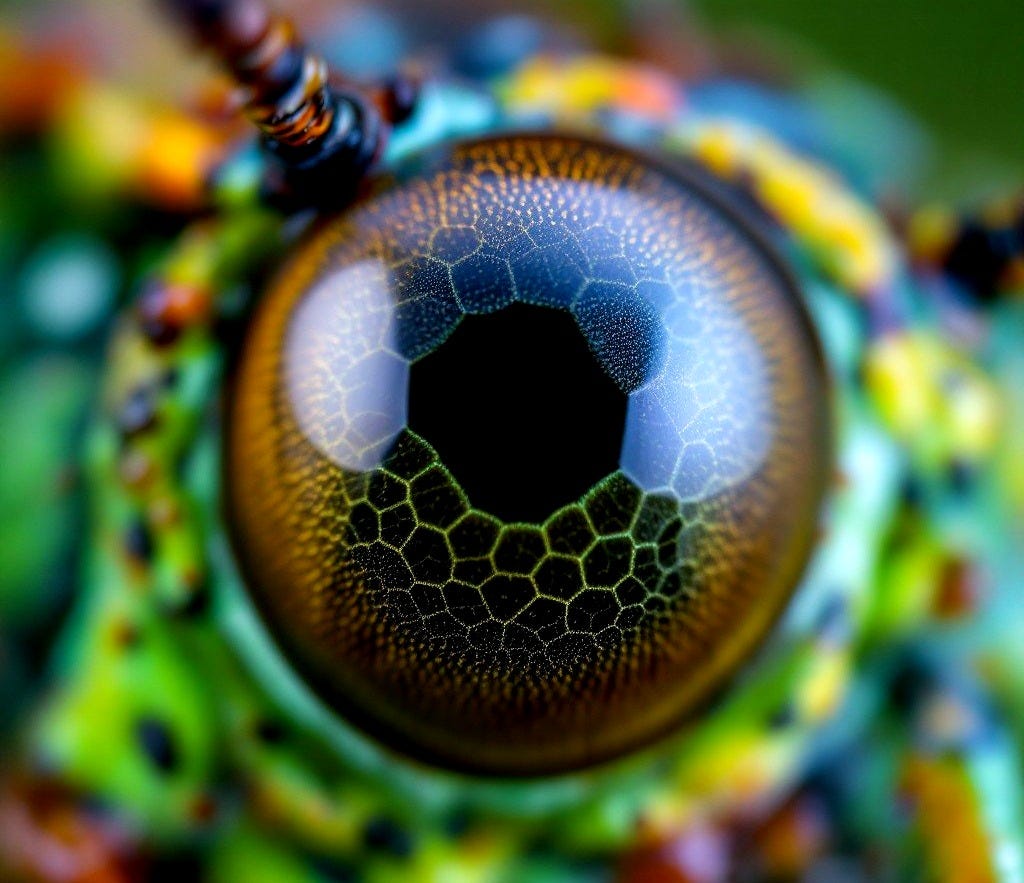
But its head was perfectly still. Its eyes were the only clean thing about it. They were a deep, molten amber, like chips of ancient glass held up to a flame. In the chaos of the wind and thrashing rain, they held her gaze with a focused, predatory stillness that felt deeply, unnervingly wrong. It wasn’t the terror of a cornered animal; it was the patience of a trap.
She spent the better part of an hour in the deluge. Her perseverance, honed by years of solitude, was nearly infinite. She murmured soft nonsense, humming a half-remembered lullaby. She retreated to the house and came back with a saucer of warmed milk, pushing it gently into the dark space with a trembling hand. For a long time, the cat just watched her, its amber eyes unblinking in the gloom. Then, slowly, a small pink tongue darted out, and it took a single, tentative lap. That was all the permission Ellie needed. Inch by painstaking inch, she coaxed it out from under the shed. When she was finally able to scoop the trembling, sodden weight into her arms, it felt less like a rescue and more like a mutual surrender.
Inside, she wrapped him in the fluffiest towel she owned, the small act of domesticity a shocking, unfamiliar comfort. He did not fight her. He sat, a pathetic little gargoyle on her pristine white bathroom tiles, and watched her with those ancient eyes. As she gently dabbed his matted, dusty-brown fur, she thought of a name. Not a simple, silly name for a simple pet. He looked like a creature of twilight, a dusty, fragile thing that had been drawn from the heart of the storm to the small, warm light of her house.
“Moth,” she whispered, and the cat blinked slowly, a long, deliberate motion, as if in solemn agreement.
The first few weeks were a quiet bliss. The oppressive silence in the house was gone. It had been replaced by the gentle padding of paws on the laminate flooring, the soft rasp of a tongue grooming fur, the deep, resonant thrum of a purr that vibrated through Ellie’s legs when he curled up on her lap. Moth was the perfect companion. He seemed to possess an eerie perception, appearing with a comforting head-nuzzle moments before the familiar ache of loneliness threatened to close in. He ate what she gave him with a delicate appetite, he used the litter tray without fail, and he spent his days following her from room to room, a small, furry shadow. Her life, once a sterile loop, now had a purpose. It had a small, warm, amber-eyed centre.
Yet, he watched her. Always. As she typed at her keyboard, she would feel a prickling on her neck and look down to find his unnerving gaze fixed on her. As she slept, she would sometimes wake with a start to find him sitting on the pillow beside her, a dark, motionless shape in the gloom, just watching. It was more than adoration. It was an assessment, a deep and constant study. Ellie, so starved for any kind of attention, told herself it was love. She told herself her loneliness was cured. She was wrong. The cure was just the beginning of the disease.
The scratching started on a Sunday. A methodical, obsessive scritch, scritch, scritch from the living room. Moth was clawing at the thick pile of the beige rug, always in the same spot. “Moth, stop that,” she would chide gently, lifting him away and placing him on a scratching post he pointedly ignored. But he would always return, his focus absolute, his claws digging in with a strange, frantic urgency. For a week, it was a minor annoyance. Then, the sound began to grate on her nerves, a single, sharp note of discord in her newfound harmony.
One evening, after she’d moved him for the tenth time, the sound started again, relentless and sharp. A flicker of real anger, an emotion she hadn’t felt in years, flared in her chest. With a sigh of exasperation, she hauled the cat away, locked him in the kitchen, and, on a sudden impulse, rolled back the heavy rug. The floorboards beneath were old, polished oak, unremarkable save for a faint, dark stain and a series of deep gouges where Moth had been scratching. She ran her fingers over them. One of the boards felt loose, shifting slightly under the pressure.
Her curiosity, now sharp and insistent, overrode her frustration. She went to the kitchen and returned with a butter knife from the cutlery drawer. She knelt, wedged the thin blade into the gap, and twisted. The metal, soft and domestic, bent with a pathetic squeak, the handle digging into her palm. The board didn’t budge an inch.
A fresh wave of frustration, hot and unfamiliar, washed through her. No. This wasn’t going to beat her. This needed a proper tool. The thought sent a jolt of unpleasantness through her, because she knew exactly where the tools were.
She walked to the door that led to the integrated garage, a place she hadn’t set foot in for months. The air that met her when she opened it was cold and still, thick with the ghosts of smells: petrol, cut grass, and the faint, acrid tang of stale cigarette smoke. Mark’s secret habit, the one he thought she never knew about, still clinging to the cold concrete walls. His old toolbox was on the workbench, coated in a thick shroud of dust. With a sense of trespassing in her own home, she wiped the lid and clicked open the rusted latches. Inside, nestled amongst spanners and pliers, was a set of screwdrivers, their yellow and black handles still bright. She chose a large, flat-headed one, its metal cool and solid in her hand.
Returning to the living room, the tool felt alien yet purposeful. She knelt, forced the tip into the gap in the floorboards, and levered it upwards. It came away with a groan of old, dry wood.
The smell hit her first. A thick, coppery, organic stench, like a butcher’s shop left in the summer sun, mingled with the damp, loamy scent of a freshly dug grave. Ellie recoiled, a hand flying to her mouth as she choked back a wave of nausea. She forced herself to look, peering into the dark, hollow cavity below.
It was not empty. Peering into the dark space, she saw a glistening, pulsating mass. Her eyes struggled to make sense of it, to resolve the details in the gloom. She saw it was woven from something, strands of cobwebs as thick as yarn, matted together with...was that her own shed hair? And God knows what else. It was a hideous tapestry, and nestled within it, like obscene pearls, were dozens of leathery, translucent eggs, each the size of a robin’s. She could see a faint, rhythmic, unified pulsing moving through them, as if they all shared a single, sluggish heartbeat. Scattered amongst the obscene clutch, like grim decorations on a Christmas tree, were the tiny, picked-clean skeletons of mice, of sparrows, of things she could not and did not want to identify.
Her mind, reeling, finally supplied the word.
It was a nest.
A low, guttural hiss sliced through the quiet room.
Ellie looked up, her heart hammering against her ribs. Moth was standing at the edge of the exposed cavity. He had somehow opened the kitchen door. His back was arched, the dusty fur on his spine standing on end. But he wasn’t looking at the nest with fear. He was looking at her. His body was angled protectively over the hole, a silent, menacing guardian.
The gentle, purring companion was gone. In its place was a creature of absolute, primordial menace. Its amber eyes were wide and unblinking, fixed on her. And in their depths, she saw it. Not fear. Not confusion. She saw a cold, possessive glare—the territorial fury of a creature defending its young.
The sanctuary of her home had been breached. No, she realised with a sudden, gut-wrenching clarity, her mind finally connecting the obsessive scratching not as a warning but as an act of incubation. The sanctuary had been the Trojan horse all along.
Her breath hitched, a dry, ragged sound in the sudden silence. Every instinct screamed at her to run, but her legs were lead. Moth hadn’t moved. He simply stood sentinel over the dark cavity, his amber eyes pinning her in place, a silent, absolute declaration of ownership.
Slowly, fighting the tremor in her knees, Ellie began to back away. One step. Then another. She didn’t dare turn her back on him. Her hand fumbled behind her, searching for the hallway door. The click of the handle was deafeningly loud. She slipped through the gap, pulling the door shut until the latch clicked, the sound a flimsy shield against the thing in her living room.
She didn’t stop until she was in her bedroom, the door locked, a heavy chest of drawers shoved against it. She sank to the floor, her back against the wood, her body racked with silent, hysterical sobs. She was a prisoner in her own home.
Hours passed. The house was utterly silent. There was no scratching, no sound from beyond the door. The quiet was worse than any noise. It was a listening quiet. A waiting silence. As the adrenaline faded, a new sensation began to creep in. It started in her forearms, a faint, maddening tickle under the skin, as if a single stray hair was trapped beneath her sleeve. She scratched at it absently, her mind still replaying the sight of the pulsing eggs.
The itching didn’t stop. It spread. It became a frantic, crawling sensation, a feeling of a thousand tiny legs marching just beneath the surface. She stood in front of her bathroom mirror, turning her arms over and over under the harsh light. She could see nothing, no rash, no bites. Yet when she held perfectly still and stared at the pale skin inside her elbow, she thought she could see it. Faint, thread-like trails, moving. She watched, mesmerised and horrified, as a tiny bulge travelled a centimetre up her vein before disappearing. A dry sob caught in her throat. The nest wasn’t just in her house anymore. It was inside her.
Doctor Evans was a man in his fifties with a kind, condescending smile. He listened to her halting explanation, his pen making neat, dismissive notes on a pad. He shone a light on her arms, took her blood pressure, and asked about her stress levels, her diet, her marital status. “Sometimes, Ms. Miller,” he said, his smile tightening, “our minds can play tricks on us. Loneliness can manifest in very physical ways. It’s called formication. A tactile hallucination.” He wrote her a prescription for a mild sedative and recommended a therapist. She left the clinic feeling a new kind of isolation, a chilling sense that she had been locked out of the world of the sane.
At home, Moth’s behaviour escalated. His gifts, once the typical offerings of a proud hunter, became grotesque statements of intent. He no longer brought her dead mice. He brought a twitching, still-living field mouse, its back legs bound together with glistening, impossibly strong strands of spider silk. The final offering was a squirrel, laid carefully on the welcome mat. Its mouth had been woven shut with the same glistening silk, the strands pulled taut through the flesh of its lips, its tiny paws bound. Each gift was a deliberate, intelligent, and horrifying act. It was a display of artistry. A warning.
The nest under the floorboards. The crawling inside her own skin. The grotesque, ritualistic artistry of the squirrel’s bound mouth. They weren’t separate events. In the sudden, deathly quiet of her mind, she saw them for what they were: a pattern. A cold, intricate, horrifying pattern. And in the centre of it, holding all the threads, was a pair of watchful, amber eyes. It was all him. Moth was not just a cat. He was the source, the architect of this entire nightmare. The love she had felt for him, the desperate, clinging affection, curdled into a cold, pure terror.
That evening, she made her decision. Her hands shook as she found the old cat carrier in the attic, wiping the dust from its plastic shell. She coaxed Moth towards it with a bowl of his favourite tuna, her heart a leaden weight in her chest. He looked at her with those knowing amber eyes, then walked calmly into the carrier. He did not fight. He seemed to know. The click of the latch was the sound of a monstrous betrayal.
She drove for what felt like hours, away from the familiar grid of the suburbs, into the tangled, unlit country roads that led to the desolate woods. The pines crowded the road, their dark branches seeming to clutch at the car. Moth was silent in the passenger seat. There were no mews, no scratches. Just the weight of his silent, judging presence. She pulled over onto a muddy track, the headlights cutting a stark, lonely tunnel into the oppressive dark.
“I’m sorry,” she sobbed, her voice thick. “I’m so sorry.” She opened the car door and carried the carrier twenty feet into the woods. With trembling fingers, she unlatched the gate. Moth stepped out, looked at her once, then melted into the impenetrable darkness of the undergrowth without a sound.
Ellie returned to her car, her body wracked with sobs of guilt and a profound, exhilarating sense of relief. It was done. She was free. The drive home was quicker. The world seemed brighter, the air cleaner. She turned onto her street, the familiar glow of the lamps a welcome sight. As she pulled into her driveway, her headlights swept across the front of the house, illuminating the porch.
And her heart stopped.
Moth was sitting there, perched on the top step, his tail flicking slowly, rhythmically. He was perfectly clean, perfectly dry, as if he had been waiting there all evening. It was an impossible act that shattered the last of her rational denials.
She sat in the car, engine idling, staring at him. The final barrier between her world and his broke down. A voice entered her head. It was not a sound. It was a thought, an idea, pushed into her consciousness with the force of a physical intrusion.
You invited me in.
Her body erupted in convulsions. She was thrown against the driver’s side door as a firestorm of agony tore through her. The crawling beneath her skin intensified into a swarming, biting, tearing torment. She was a hive, a vessel teeming with a million points of writhing life. Moth leaped from the porch onto the bonnet of the car with impossible silence, his amber eyes glowing in the dashboard light. He walked to the centre of the windscreen and pressed his face against the glass, directly in front of hers, until his features blurred. As the firestorm of agony tore through her, his eyes were the only thing in focus, a pair of burning, unblinking portals pinning her to her seat. She could not look away. He watched her come apart as the voice screamed into the core of her being, a soundless, endless shriek of triumph.
You are the nest.
And then...silence. The firestorm of agony vanished, extinguished as suddenly as it had begun. She lay on the cold laminate of the hallway, the echo of her own terror still vibrating in her bones. But it was fading. The frantic, shrieking ego that had been Ellie Miller was not so much dying as it was dissolving, like a watercolour painting left out in the rain. A final, fragmented thought surfaced—Mark, the smell of his cigarettes on the cold garage air—and then it, too, was washed away. The sharp edges of panic and grief bled into a profound, unnerving peace.
The vacuum she had spent twelve years curating was being filled. It was a quiet, inexorable tide, no violent flood. A silent, chittering consciousness seeped into every empty room of her soul. It was a harmony of a thousand tiny wills, a low, constant hum of purpose that cancelled out the solitary scream of the ‘I’. The loneliness didn’t just end; it became an irrelevant, nonsensical concept, a memory from a different species. She was not alone. She was a multitude. She was whole. She was ‘We’.
Slowly, a new, serene grace defined her movements. She rose from the floor, not as a woman who had collapsed, but as a queen ascending a throne. She walked to the bathroom and looked in the mirror. Her face was pale, but her eyes were no longer her own hazel-green. They were a clear, luminous, molten amber, and from their depths, a thousand ancient hungers looked out with a single, patient gaze. The frantic edge of loneliness was gone, replaced by the humming presence of the hive within her. The old Ellie was no more; the hive was home. Her purpose was no longer to find a companion, but to serve. She was the gardener, and her body was the soil.
Her neighbours noticed the changes. Mr. Henderson from across the street, a widower who always gave her a sad, friendly wave, saw her smile now. It was a wide, fixed smile that never quite reached her amber eyes. He saw her talking to her cat, a low, guttural murmur that sounded like two voices at once. Then, pets in the neighbourhood began to go missing. First a prize-winning Persian, followed by a boisterous young spaniel. Mr. Henderson’s own beloved terrier, Buster, vanished on a Thursday. After two days of frantic searching, he walked across the street, his face a mask of worry, and knocked on Ellie’s door.
She opened it with an unnerving, predatory warmth. “Mr. Henderson,” she said, her voice carrying a strange, layered cadence, a subtle harmony beneath the words. “How lovely to see you.”
“Ellie,” he said, twisting a flyer with Buster’s picture on it in his hands. “I’m sorry to bother you. I was just wondering if you’d seen Buster? He slipped his lead…”
Ellie’s smile widened. Her gaze drifted past him for a moment, towards the living room. “Of course. Come in, come in,” she said, her voice a low, reassuring hum as she opened the door wider. “He’s very friendly.”
Moth purred from his spot on the arm of the sofa, a deep, contented sound, as if in answer. Believing she was referring to his lost dog, Mr. Henderson gave a weak, relieved smile and stepped inside. The door clicked shut behind him, the sound satisfyingly final.
His hopeful expression began to slacken almost immediately. His gaze drifted from the floor, to the walls, and then up to the ceiling, his eyes struggling to adjust to the dim light. His nostrils flared, a slight, confused twitch, as he processed the new aroma of the house: the sweet, thick scent of decay and nectar. His eyes darted into the shadowed corners of the room. A faint, dry chittering seemed to seep from the walls themselves, a sound as comforting to Ellie as a ticking clock, but Mr. Henderson flinched as if he’d been struck.
His attention snapped back to her, his mouth opening and closing a few times without a sound. His gaze dropped to her hands, which had begun to twitch at her sides. He watched, mesmerised, as she flexed her fingers, the movement slow and deliberate. For a moment, his mind couldn’t process what it was seeing. It looked as though her perfectly manicured nails were... loosening. As if the skin at the very tips of her fingers was splitting. He looked from her hands to her placid, smiling face, his own expression a slack mask of disbelief. He saw no change in her amber eyes, no flicker of emotion. He looked back at her fingers.
It wasn’t a trick of the light. The pale skin peeled back like a grotesque cuticle, revealing not flesh and bone, but something black, segmented, and chitinous. Tiny, clicking mandibles unfolded, glistening wetly in the dim hallway light.
His confusion curdled into a primal, absolute terror. His scream was a high, thin, unsatisfying sound, cut short almost as soon as it began.
Later that evening, Ellie sat peacefully on her porch swing, stroking Moth’s soft, dusty fur. She was not lonely. Across the street, a single light burned in Mr. Henderson’s living room window, a timer she knew he always set for nine o’clock. The sight of it, the mundane and pointless continuation of a life that was no longer there, filled her with a deep and profound sense of peace. She watched the house, a dark shape against the still-bruised evening sky. The silence from it was deep and satisfying.
The family with the small girl had looked so promising when they’d toured Mr Henderson’s house last week. She’d have to wait now, of course. Patience was a virtue the hive understood well. But someone new would come eventually. They always did.
Her amber eyes, placid and ancient, remained fixed on the empty house. Her smile never faltered. Her hand continued its slow, rhythmic stroking of the cat’s fur, and for just a second, a tiny, black, chitinous leg twitched from beneath her perfectly manicured fingernail.
The hive was hungry. It would wait.

Oh this left a chill down my spine. Excellent write Gary….
Well, tell her that Tom really liked it - and when she says "Who's Tom?", say don't worry about it. I think it's really sweet that you have your wife as part of the idea process. I might ask my partner, Becca, what she would like to see too. Almost like couple prompts hahaha!
Oh, brilliant - best of luck with the pitch. This definitely has some really good "moments" that you could see adapted.
I think that cats are certainly a staple of yours. I like it! Embrace the nonhuman!