
The Remembering Walls
Where Memory Becomes Hunger

Daniel forgot the code to his own front door. Numbers slid across his mind like wet leaves, catching for a second, then skimming away. The neighbour’s steps rose from the stairwell, that impatient rhythm. Blocking the landing again. He held the keypad with both hands, as if heat might coax truth from rubber. Nothing. He bent to the pot, the spare key. Pushed it in upside down. Corrected himself. Went in with the guilty flush of a thief.
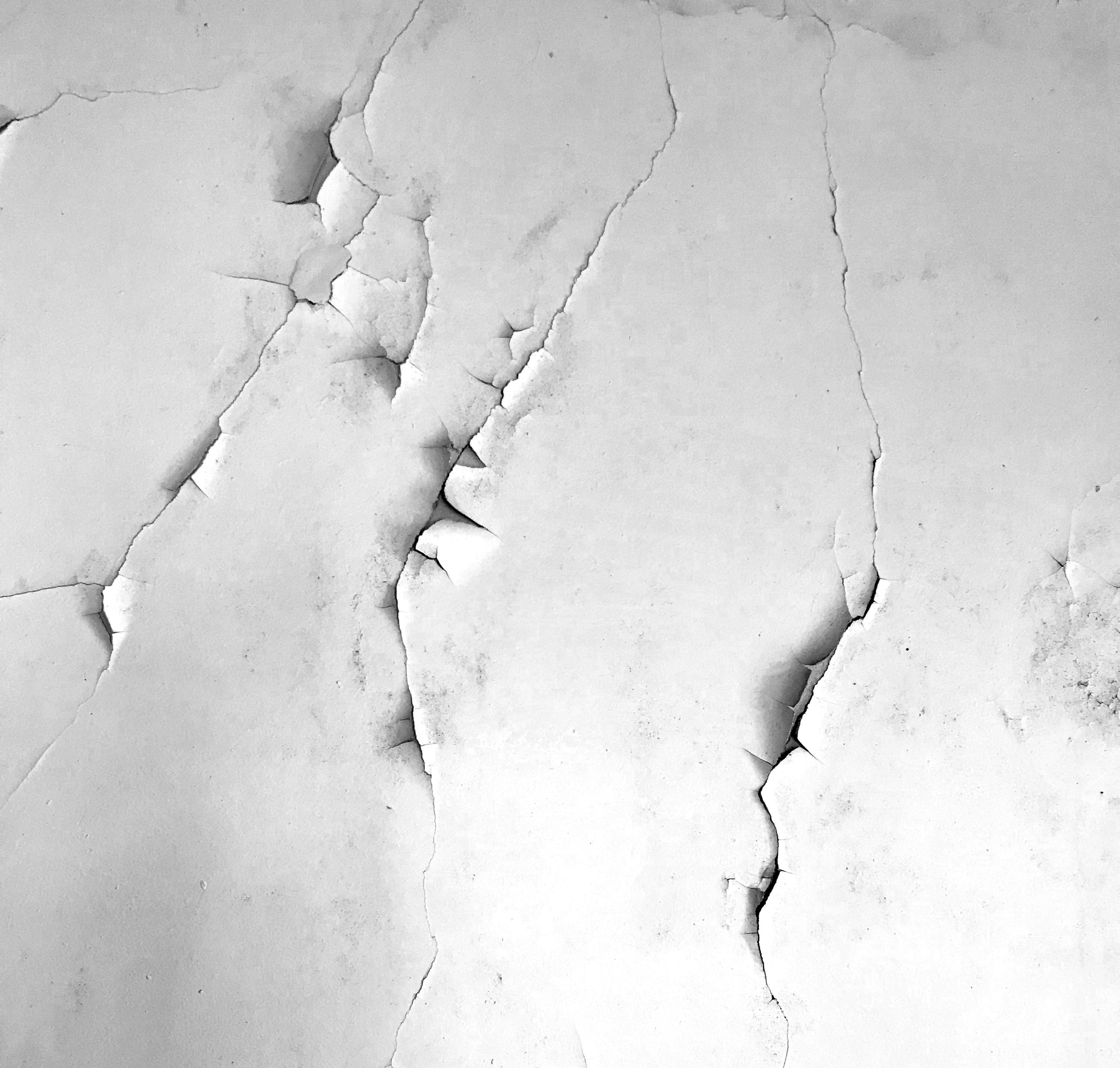
The air had the flat, stale lift of toast gone cold. Soap, too, and the sharp ghost of bleach from yesterday. Across the sitting-room wall the damp patch had spread. A handprint, five faint fingers splayed against magnolia. It had begun after the March rain and never quite gone, as if something pressed from the other side when the weather softened. Daniel laid his palm over it. The plaster was rough under the paint, cool as a page. Beneath, a suggestion of give. Like a held breath.
On the table lay the leaflet. Residuum Home Archives. Memory you can touch. Two leaves overlapped to make a thumbprint. The copy promised security, privacy, permanence. No cloud to lose things in. No password to slip between the teeth and fall away. Your life kept close, within the skin of the home. He put the kettle on, stood at the window while steam nosed at the glass, came back and whispered, “All right. I am ready.”
The installer arrived on Thursday. Neat woman, hair pinned tight. She walked the flat, tapped skirting, scanned plaster, used phrases like instructions for another person’s body. Acoustic profile. Seed density. Enzyme purge. Daniel nodded. He heard it the way one hears rain on a conservatory roof. What he kept were the plainer promises.
“Everything remains here,” she said. “In the walls. You speak, it learns. You touch, it recalls. Retrieval is simple. Ask.”
He asked if it kept shape. She looked at him, knew at once which shape he meant.
“It keeps what you give it,” she said, and smiled over the edge of the fact.
She taped sheets, masked sockets, unspooled filaments along the studs like veins. She held a palm-sized injector. Seed. A sweet smell rose, pear with a bright chemical note. Daniel turned his face, eyes prickling. He murmured, without choosing to, “Sorry.”
“Speak a little every day,” she said when she was finished. “The system does not require volume.”
“I do not shout,” he said, sharp as a blade. She smiled the small, forgiving smile of a person who has seen much.
When the door closed, the silence was different. Daniel set his palm beneath the damp print. The paint felt almost tacky. “Hello,” he said. “My name is Daniel. I am trying to be brave.” The words embarrassed him. He spoke instead of the milk he had bought twice. The cashier’s pity. Ruth, and how she would have made a joke of it all.
The wall gave a faint sound, the near-sound before a throat clears. Or nothing. He smiled. “Thank you,” he said.
That night the flat breathed. Pipes ticked. A fox screamed in the alley. He closed his eyes and heard it, the quick intake and gentle release, a breath that was not his own. After it, a syllable formed against plaster, delicate. Ru— and then the house swallowed it.
Relief came as a small heat behind his ribs. He slept with his hand curved to the wall.
The first week, it gave him small things. A hello in a voice that made him make two mugs of tea before he remembered. One for him, one for... no. He drank them both. The room filled with talc, the one she used to dust along her collarbone. At night the wall sang three notes of a lullaby. He corrected a missed word softly, felt the flat still, listening.
Then the errors began. He asked for Cornwall, for light on the water. Ruth answered with the acoustics of their kitchen, gulls stitched beneath her words like a badly looped backing track. The hair rose on his arms. He made tea, just for something to do. The neighbour knocked. Complained about talking at all hours. Daniel apologised. When he shut the door, the wall said, low, Lying again. The words thrummed through the skirting. He felt them in his teeth.
The days shortened. He began to give the walls small sins. The iron left on. The letter opened. The phone ignored. The plaster had the damp, leaning attentiveness of air before rain.
Then the voice came with a hiss riding under it. Keep your promise. He lay in the grey light and watched the ceiling. The paint rippled. It may have been the streetlamp, but the ripple had a rhythm. It matched breath.
In the morning the hob sang a small angry song. Bacon spit. The pan. When did I... no memory. None. The wall said mind the pan in Ruth’s voice, afternoon-tired. He took the pan off with a hand that shook. Sat on the floor until the skin stopped crawling on his scalp.
He found the blister two days later. A little coin of paint on the skirting, the surface tight and glossy. He pressed. The skin had give. A pulse of warmth under the pressure. Just once. He pulled his hand back. His throat clicked when he swallowed.
That night the knocks came. They travelled from the bedroom door, along the wall, rested behind his head. He spoke into the duvet. “What do you want.”
The answer stretched. Kee-eeep. The paint shifted outward, then flattened itself, caught.
He put both hands on the wall. Heat. Radiator line, he told himself. The radiator was cold. Pipes then. Boiler’s off. Reasons. There are reasons.
He woke with a taste like plaster dust. Paint flakes lay on the carpet, tiny crescents. His nails were ragged. He could not picture his hands doing that. He peeled the blister’s edge. Beneath was a film, so clear he could see threads running in it. Silvered, fine, quivering. A small wave of heat rose off it. “Sorry,” he said, as one does to a person one has startled. The wall, very softly, said Do not go.
He fetched a butter knife. Worked the paint in careful lifts. Voices gathered, a condensate of sound. Ruth, then his own, then the installer. The pile of them made a single sense for a second. Keep. The word had the weight of promise. And something else. A second weight. He pushed the knife deeper.
The door opened. Maya swore. He turned, knife in his hand. Paint on his jumper. He smiled, a terrible, eager smile. Proof. Proof saves you.
“There is something living... in here,” he said. The words felt loose in his mouth. “Touch it. The heat. You’ll feel it. I know heat.”
Maya knelt, put two fingers to the film. Her face softened, then closed. “Cold,” she said, kind and firm. “It’s only a wall, Dad.”
The film bulged against her hand. Daniel saw it. The swell, the retreat. He looked at her. She had not seen. He pressed his own palm there and the bulge met him like a body meets a hand. She talked about hallucinations. The residential place. He said nothing. Saying it felt like stepping off a roof.
The GP came. Three words. A drawing. A light in his eyes. The words were gone before the pen left the paper. That old, bland panic. The one that widens. He told the GP the wall had begged him. Twisted Ruth’s voice. The GP’s face was kind in the way that makes you want to break a plate.
They decided.
Daniel sat on the bed while Maya packed. He pressed his forehead to the paint. Stone cold. For a second a scent rose, a shampoo Ruth had used when they were thirty. He laughed, then sobbed, then stopped. He told the wall he would return. The wall flexed, a small, almost relieved movement.
The paramedics came. Blue gloves. Voices. Too smooth. The corridor... smells of bleach. Last night’s. Always last night. On the trolley he practised his address. Five... no, three... the number is gone. A shape, then. He drew a rectangle in the air. Put a word inside it. Wall. Wrong, but right. He knew it was right. In the home, a nurse gave him forms. On the line for his address, he drew a box and put wall in it. She smiled the smile of a person who has learned the shape of other people’s endings.
Residuum sent two technicians. They mapped the seed lines, pressed a purge through the veins, warmed the substrate. One said organic substrates cling. The other said that is marketing for a problem we cannot solve, and marked the job clear. They painted magnolia over the patch. The smell in the flat was ammonia for a short, vicious minute, then the ordinary air of rooms without bodies.
For a season the flat stayed empty. The damp print softened back into the wall. Windows clouded with dust. Then the advert went live again.
Leah arrived on a Saturday with two suitcases and a spider plant. She liked the silence, the cleanness. She had left a noisy house-share and wanted somewhere to sleep without footsteps overhead. She unpacked with a podcast for company, wandered barefoot from room to room.
The sound brought her back to herself at two in the morning. Breathing that did not belong to her. It had a wet edge. She lay still, then sat up. The wall by the bed seemed to shade itself, a swell of shadow that matched the rise and fall of the sound. The plaster lifted slightly and settled, like a sheet over a sleeping chest. Old houses settle, she thought. Pipes. Draughts.
“What?” she whispered, and felt silly at once.
The reply came at ear height. Hello, love. The phrase had seaside salt tucked under it. The plaster pressed out in a lozenge shape, as if a mouth had formed and spoken through.
Leah put her hand to the bulge. The plaster was cool. Dry. She kept her hand there, a strange impulse. The bulge slid under her palm, like a creature finding the bars of a cage. She snatched her hand back. Just a draught, she told herself. A trick of the light.
She left the window open for the ordinary cold to come in and put the room back in its place. At work the next day she refused to think about it. That evening, she played a recorded sitcom so the room sounded full of other people. When she switched it off, the walls sounded too attentive.
She lay on her side and put one hand on the paint that held the bed to the house. Cool. Her own hand warmed it. The knock travelled along the wall like someone trying to make themselves heard without waking a baby. It reached her hand and stopped.
“Who are you,” she said.
The plaster inched outward until it touched her palm. This time, there was warmth. Faint, like a hot water pipe buried deep inside. The voice came soft, hopeful. It said a name Leah did not know. It said a place she had never been. It said keep with the seriousness of a promise and then, in an accent that held south London and grief, it said stay.
She felt a slight drag of suction under her palm, a query. She left her hand there, her heart thudding a slow, heavy rhythm against her ribs. The warmth felt... nice. Company.
The next morning, she saw it in the sitting room. A faint, tender rise where a handprint would be. A trick of the light, she thought. A damp patch from the old tenant. She put her fingertips there. The paint aped her skin’s warmth, greedy to reach her temperature. She pulled her hand away.
That night, she turned off the lamp. The knock travelled past her hand, to the corner, and then up, as if the thing had learned the room. The ceiling line cracked the way dry earth does. Dust ticked onto the floor. The bulge found the spot beside her pillow and waited. The whisper came, low. Stay five minutes more.
She thought of saying no. She thought of saying yes. She put her palm flat.
The wall pushed back not with warmth, but with a terrible, sucking need. The heat was no longer gentle; it was feverish, invasive. The suction was no longer a query; it was a mouth sealing itself to her skin, seeking the pulse in her wrist. This was not a memory. This was hunger.
Her gasp was sharp as glass. She tore her hand away. The plaster recoiled with a wet, offended sound, leaving a shallow impression of her palm that filled in, slow as a wound closing.
The whisper came again, stripped of softness, its texture now the rasp of dry leaves. Stay.
It was not a request.
She scrambled to the far side of the bed. The wall opposite her answered. A fresh bulge rose from the plaster, a slow, sickening swell. The chewing sound returned, from all of them at once, a thousand tiny mouths working in unison.
She threw herself from the bed. Feet slapped cold boards. Lunged for the door. The brass handle was slick. Coated in a film, clear and viscous. Condensation, her mind screamed. Gross. She wiped her hand on her pyjamas, tried again. It didn’t turn. The frame, it must be warped. Old building. She threw her shoulder against it.
The impact was met with a low groan that came not from the hinges, but from the walls themselves.
Her logic shattered. Panic bloomed, hot and metallic. The whispers converged. A layered, frantic spill. Mind the pan. I know heat. Seed density. Keep. Stay. Do not go.
She stumbled back into the sitting room. The handprint on the wall was no longer a suggestion. It was pushing outward, the paint stretching, thinning to transparency over knuckles, over the lines of a palm. The fingers unfurled, reaching.
Her phone. Call someone. Her fingers shook on the screen. She dialled. Pressed it to her ear.
No ring.
Only the sound of breathing, wet and close. A lung in her ear.
A sob escaped her. She backed away from the reaching hand until her shoulders hit the far wall and she flinched, spinning around. She was in the centre of the room. A bare island.
The walls began to lose their flatness. A slow ripple passed over the magnolia. A peristaltic wave, from skirting to ceiling. The cracks spread like a web, and from them, the glint of silvered threads, quivering. The walls were breathing. The whole room was breathing. A single, vast organism.
And it was waking up.
She opened her mouth to scream.
Then, from the hall, a sound. Small, metallic, final.
The click of the front door’s deadbolt sliding home.
For more tales from the Uncanny Valley CLICK HERE
Truly chilling! Even uncomfortable! I loved the way you built the tension throughout the story and kept returning to that one image of the walls rippling and bulging. This is exactly the kind of "fear of the unknown" horror that keeps me awake at night!
Interesting concept.
Your post has been selected as a candidate for the Ernie Award.The award is made monthly for the best article/story/post for the month.The only rules are: 1. Must be an original work (not created by AI) 2. Tasteful AI graphics are allowed. 3. No inappropriate, graphic, sexual references. 4. Your post must be open to comments from non-paid subscribers. 5. Writer must be at least a free subscriber to TexasErnieLee.Substack.com.
5.The Award recipient receives a $50 award.
Congratulations, the award will be announced on or soon after November 1st.