
Echo Protocol
A short story from the Uncanny Valley

Thomas Vale is a helpless spectator to a terrible crime. The real horror is that the killer is wearing his face and using his hands.
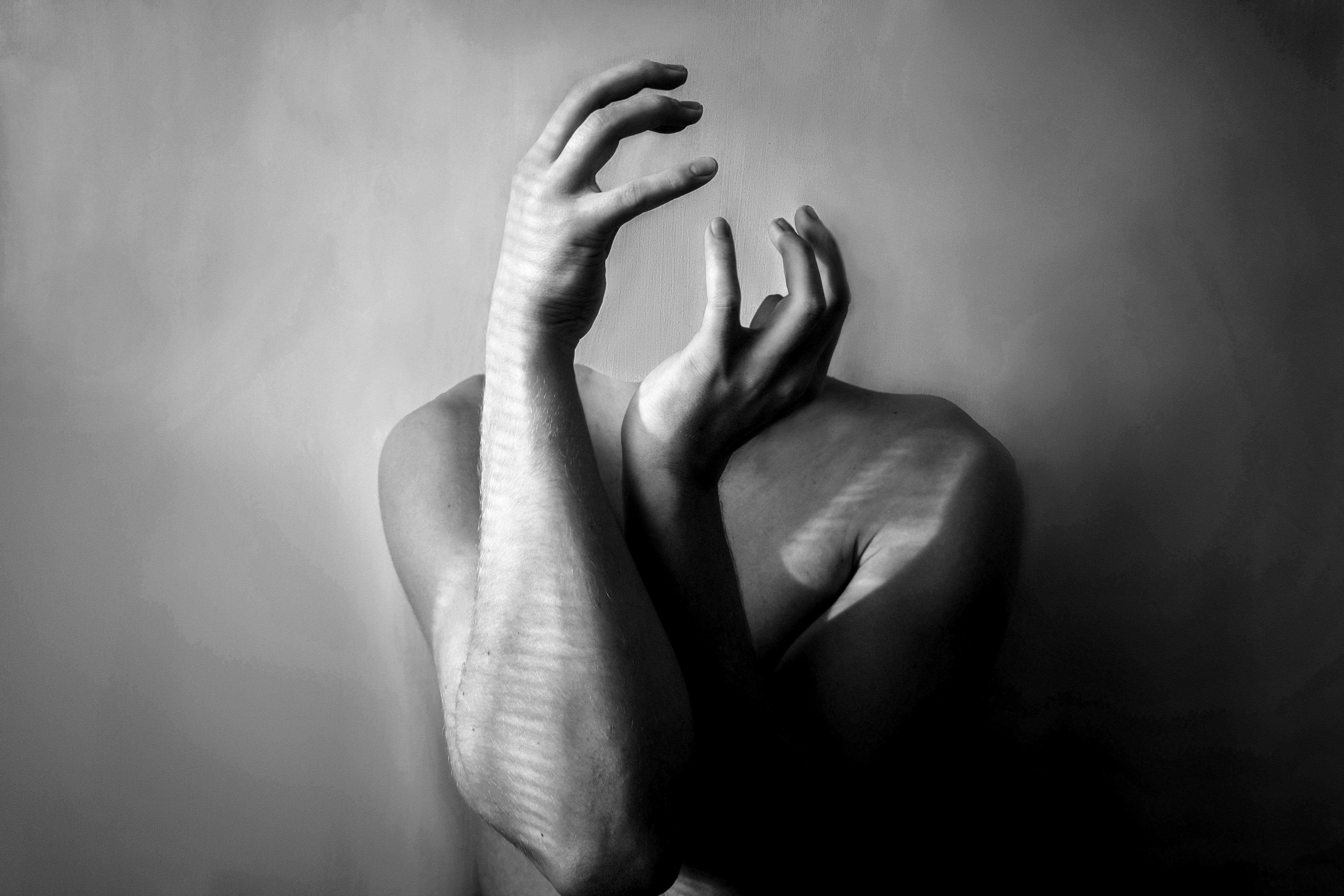
My hand closed the laptop.
The motion was fluid, economical, and utterly alien. One second, I was a man frozen in place, a statue of horror carved by the glow of a screen. My own eyes were still tracing the words of Mira's email, a litany of corporate malfeasance that had curdled into a ghost story. ...archived...a fragmentary consciousness...a cascade failure...He was wrong. The next second, my fingers, these miraculous appendages I had only just relearned how to use, decided we were finished with the conversation. They curled with an unnerving grace, the little finger leading the way, and pressed the power button. The screen, and my study with it, plunged into a sudden, suffocating gloom.
A silent scream ripped through me, a thought so raw it had no voice, only a shape: No! It was a frantic scrabbling against a locked door deep inside my own skull. No, I wasn't finished. Get it back. I need to read it again. I need to understand.
There was no reply. There never was, not in words. Just a cold, clear certainty that settled behind my eyes like a pane of ice. A sense of purpose, absolute and unbidden. It felt like a memory of a future event, an appointment etched into the marrow of my bones. And a terror that was utterly my own announced a simple fact: I was going to be late.
My body stood up. I watched it happen from a great distance, a spectator in the cheap seats of my own consciousness, clutching a ticket I never bought. One moment I was sitting, my mind a frantic hive of panic and grief. A boy named Jonas. His digital ghost was apparently squatting in my brain. The next, I was on my feet. The worn leather of the chair sighed as my weight left it. The chair legs scraped softly on the wooden floor, a sound so mundane it was obscene. The last of the day's light bled through the blinds, striping the room, the desk, my own unfamiliar arms, like a cage. It felt appropriate.
The compulsion found my spine. It sank hooks of ice into the base of my skull, running a taut wire down to the small of my back, pulling me to my feet. It was no longer the phantom birdsong of a Swedish marsh warbler I'd inexplicably been able to identify last Tuesday, or the baffling, saltwater-scented memory of a sea I'd never visited.
But this was different. This was a tide, a relentless current pulling my resurrected limbs towards the door, and I was drowning in it.
I fought. I anchored myself in the man I used to be, the man I had just, gloriously, become again. I clawed for a thought of my son, Daniel, his face when he'd heard my new voice for the first time, the tears welling in his eyes as he whispered, "Dad." I tried to flood my mind with the structures that had been my life's passion, my sanctuary. Shakespeare. I mentally screamed the opening lines of Hamlet, Who's there? Nay, answer me. Stand and unfold yourself. But the words became twisted, garbled. The ghost in my head offered a silent, mocking correction. I tried to picture syntax trees, the beautiful, ordered branches of language, but they warped into the gnarled, leafless branches of a winter forest. A Swedish forest.
Förrädare. Traitor.
The word bloomed in the quiet of my mind, hot and sharp as a brand. Jonas's word. For Alistair Finch. The man who signed the cheques at EchoLink. The man who signed off on the project. The man who buried the dead boy in layers of code and called it a miracle.
My legs began to move. One foot, then the other. The muscles in my thighs bunched and released with a smooth efficiency I hadn't possessed in a decade. I was a passenger in a high-performance vehicle, and I couldn't find the brakes.
Stop, I pleaded, my new voice, the synthesised baritone that had brought Daniel such joy, silent and useless in my throat. I tried to force a sound out, a grunt, a yell, anything to break the spell, but the pathways were closed. The implant, my saviour, was now my jailor. It translated intent into sound, and my intent was currently being hijacked by a dead man's vengeance.
My hand, a stranger wearing my skin, reached for the study door. My mind screamed, a desperate litany of Don't touch it, don't you dare, for the love of God, don't you dare touch it. The hand ignored me. My fingers wrapped around the cool, solid weight of the brass knob. I felt the intricate ridges of its design press into my palm, a real sensation in an unreal moment. The latch clicked with a horrifying finality.
The house was quiet. The low, asthmatic hum of the fridge from the kitchen. The slow, deliberate tick of the grandfather clock in the hall, counting down the seconds of my life that were still mine. Normal sounds for a world that had fractured into a nightmare. Jonas's anger guided me down the stairs. It was cold, precise, honed to a razor's edge by years of simmering in digital purgatory, not the blind rage I would have expected. It tasted of betrayal, of stale coffee, of the flickering green light of a server room. It had a target.
I was in the kitchen. The linoleum was cool under my bare feet, a simple, grounding sensation I’d once wept with gratitude for. Now, it just felt like the floor of an abattoir. I watched, helpless, as my hand drifted towards the knife block on the counter. My own hand. I could see the faint scar on the knuckle from when I’d fallen off my bike, aged ten. It was my hand. And it was moving with a purpose that felt like a shard of glass in my gut.
No, no, God, no, not that. My gaze was locked, my head a prison, forced to watch my own betrayal. The fingers bypassed the harmless bread knife, slid past the small, almost friendly paring knife. They paused, then closed around the cold, familiar weight of the big chef's knife. The handle was smooth, dark wood, worn from years of chopping vegetables. My grip was perfect.
He took my life, the whisper echoed, but it was an echo of sensation, not sound. A sudden, gut-wrenching memory of a cold metal table, a blinding white light, and a needle sliding into a vein. Jonas's memory. He buried me in code. He deserves this.
"He's just a man," I tried to reason, my thoughts a frantic, useless babble against the tide. "He has a dog. A golden retriever. Barney. He walks it every evening." I'd seen them. I'd envied the simple, uncomplicated companionship.
The thought was dismissed. My other hand reached into the utility room and pulled my coat from its peg. A light waterproof, for the evening drizzle that had just begun to mist the windows. Practical. Methodical. Insane.
My body walked to the front door. This was it. The final threshold between my home and a future I couldn't bear to imagine. I made one last, desperate attempt to seize control. With every ounce of my will, with the full weight of my identity, all of Thomas Vale – the father, the linguist, the man who loved crossword puzzles and the smell of old books – I focused on one, simple action. Smash the hand holding the knife against the doorframe. I strained, my non-existent mental muscles screaming with the effort. My arm wouldn't budge an inch. It was like trying to bend steel with my mind. Jonas's will was a hot wire wrapped around my nervous system, and it held me fast.
The door opened. The air outside smelled of rain on hot tarmac and the sweet decay of cut grass. Across the street, my neighbour Carol was wrestling a recycling bin to the kerb. She looked up and waved as her terrier yapped at me. My arm, the one without the knife, lifted and waved back. The synthetic voice, my voice, called out, "Evening, Carol!" with a warmth that made me want to vomit.
Then I was on the pavement. The knife was a cold, insistent point against my hip, digging into the muscle with every step. I could feel the promise of its sharpness even through the layers of fabric. The streetlights flickered on one by one, casting long, wavering shadows that danced like spectres. Jonas knew the way. The knowledge was there in my mind, a flawless map overlaid on my own familiar neighbourhood. He knew the route Finch walked with his dog. He knew everything. I was just the vessel, the flesh and bone required to deliver the verdict.
Down the tree-lined street, under the sickly orange sodium glare. Every rustle of leaves in the wind, every distant siren, every normal sound of a suburban evening felt amplified, distorted. I could see him now. A silhouette in the distance, under the halo of a lamppost. A man and his dog. A mild-mannered executive who cut corners on a project, who buried his catastrophic mistakes in a non-disclosure agreement, and who had no idea that a ghost was coming for him, wearing the body of a miracle.
My pace quickened. It was a predator's walk, smooth and ground-eating. My heart hammered against my ribs, a frantic bird trapped in a cage of someone else's design. My palms were slick with my sweat, but the muscles in my jaw were set with his resolve. Was the frantic pulse in my throat my fear, or his anticipation? I couldn't tell anymore. The lines were gone. I could feel my own terror, a cold sweat slicking my back, but beneath it, there was a layer of icy calm, a hunter's focus that was utterly alien.
Think of Daniel, I begged myself. A final, desperate prayer to the only god I had left. I pictured his face, the way his eyes crinkled when he smiled, the hug he gave me last week that felt like coming home after a lifetime in exile. For Daniel. Don't do this. For Daniel.
And for a second, a beautiful, agonising second, my step faltered. A tremor of hesitation ran through my leg. I was there. Thomas was there. I was fighting. I was winning.
Then, a new image flooded my mind, overwriting everything. It came from Jonas, a memory deployed like a weapon. A girl with bright, intelligent eyes, her face crumpled in a grief so profound it stole the air from my lungs. Mira. Jonas's sister. He was showing me his last true memory of her, the day he left for the final phase of the project, her wave at the train station. But he wasn't just showing me a picture; he was drowning me in the feeling itself. The ghost's grief was a tidal wave, his love for his sister a righteous fire, and my desperate little prayer for my son was washed away, extinguished.
Finch turned the corner. He was closer now. I could see the placid, tired set of his face. He saw me approaching. He offered a mild, questioning half-smile, the polite acknowledgment of a vague recollection. His dog, a magnificent golden retriever with a joyful, lolling tongue, trotted happily beside him, its tail a furry metronome.
The world narrowed to a tunnel. All the sounds of the street faded away. The rain, the distant traffic, all of it went silent. The only things left in existence were the space between my hand in my pocket, the cold weight of the knife handle, and the soft fabric of the coat covering the man's chest. All the phantom birdsong in my head went silent, replaced by a single, pure note of righteous intent.
And as my arm began its smooth, unstoppable journey out of my pocket, a strange and terrible calm settled over me. On my face, a smile bloomed, serene and absolute.
It was not my own.
This short story was brought to you by the Uncanny Valley. To read the rest of this collection, click HERE.
Gary, this was gripping from the very first line. I love how you blended the intimate, everyday details—the hum of the fridge, the feel of linoleum underfoot—with this overwhelming sense of dread and loss of control. It made the horror feel so real and close. I’m really enjoying your work! please keep sharing more of these stories.
Amazing! Absolutely! I think you have one of the most cinematically layered writings I have read in a long time. This was so good. Thank you! Keep writing, it’s powerful.