
Room Must be Made

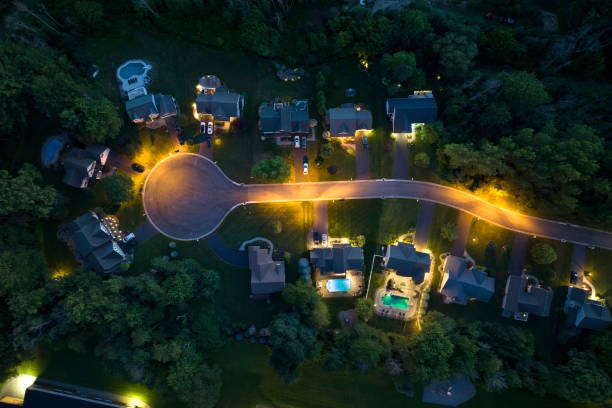
Tom brought the department SUV around the mouth of the cul-de-sac. Unmarked, blackwall tires, the spotlight bracketed to the A-pillar, the radio in its cradle. Everybody on the street knew what it was, which was half the point of a take-home.
Laura beside him with three paper cups stacked in one hand. Owen in back with Hannah, the soccer bag upright between her feet. She played the whole second half without once looking at any of them. They clapped anyway, the three of them on cold bleachers performing the shape of a family.
The upstairs light was on. That meant nothing. Laura’s sister had Owen’s old room now, she and the girl both, and somebody in that house was always awake, moving room to room, looking for one they were not in the way of.
Then he saw the man in the window.
He braked hard enough to put Laura’s shoulder into the belt.
Bedside lamp, low and yellow. Daniel Murdock stood behind the glass with his arms at his sides, looking down into the street. Tom placed him before he could stop himself, out of the inside of another house on another night, out of what had been left on the floor of it.
There was no window there.
“What?” Laura said.
“Stay in the car.”
His hand went to the radio out of habit. Nine years a sergeant, and you call it in. He left it in the cradle and went up the drive alone.
The front door was locked. He used his key, drew his weapon in the hall, called Beth’s name. Something went over upstairs. Lucy started screaming.
The house got smaller while he cleared it. Owen’s bedding at the end of the pull-out, shoes along the baseboard, a laundry basket on the third stair so that he had to turn sideways to get past it with the gun still up. Beth came out of the bedroom dragging Lucy by the arm and put her back flat to the wall the way people do at the sight of a thing they have already survived once.
“Where is he?”
“Who?”
“Stay there.”
He cleared all of it. Behind the doors, under the beds, the closets deep enough to hold a man. At the end of the upstairs hallway he came to the wall that had always been there. Drywall, no door, no room.
The window he had seen from the street belonged somewhere behind it.
He put his palm flat against it. Cool. Solid. It went nowhere.
Beth sat on the bottom stair with Lucy against her chest.
“It’s clear,” he said.
“Was it Joel?”
Before he could assure her, Laura was calling him from the yard.
He went out with the gun down at his side.
Daniel Murdock stood at the foot of the driveway with his dog against his leg. The rest of them had gotten out of the car and stood in a loose line between the two men.
Tom came down the drive fast.
“What were you doing in my house?”
The dog got up. Daniel moved back off the curb and put a hand out flat.
“I’ve been standing in this road four minutes.”
“You were in the upstairs room. I watched you from here.”
“Dad.” Owen came around the front of the car. “He walked up while you were inside. We watched him the whole way from his own door.”
“He never went near the house,” Laura said. “All of us saw him.”
Tom stood in his own driveway with the gun in his hand and nothing to point it at.
Then Daniel brought the paper up in two fingers, the way you hold something you have already decided not to touch any more than that.
“So you tell me about this, Walsh. It was in my box with your name on it.” His voice stayed level the whole way through. “You want me off this street, you come down and say it to my face. You don’t put this in my mailbox at eleven at night. Whatever you think I am.”
Tom looked up.
The window was still there. Daniel stood in it, pale under the lamp, the wall behind him showing faintly through his shirt. Tom looked down at the man at the foot of his driveway, then up again.
Daniel turned. He looked at his own face in the Walsh house, and the hand with the paper in it came down slowly to his side.
“What is that?”
Nobody answered.
Hannah let the bag drop on the grass.
“Dad.”
She was looking at the mailbox. The red flag stood straight up.
Tom crossed the yard. The metal was cold. Inside lay a single sheet folded once, no envelope, the writing done by hand in dark ink, an old-fashioned cursive with loops on it, no correction.
Owen came to his shoulder. Daniel came too, holding his own sheet up beside it without being asked.
The same hand. Both of them.
There is a room for Daniel Murdock in this house.
He must be accommodated before sunrise.
Someone who lives here must open the door and let him cross the threshold.
If he is not inside by sunrise, the room where he sleeps now will be taken away.
Daniel Murdock will die with it.
They read it under the porch light. Daniel’s said the same except for where the room was. There is a room for you in the Walsh house. The same loops, the same clean unhurried run of ink.
“I thought one of you wrote this,” Daniel said. “I’ve sat with it an hour. That somebody sat down and wrote this to me by hand.”
“Nobody here wrote it,” Laura said.
“I know that now.” He looked up at his own face waiting under the lamp, the wall coming through the shirt the way a stain comes through wet paper. “So who did?”
Nobody had an answer. The not having one sat on the yard.
Owen said it first. “It says before sunrise.”
“Owen.”
“It says the room where he sleeps gets taken away. Dad. It’s telling us what happens.”
“It’s telling us what it wants us to think happens. It’s a sick prank.” The words came out thin.
Daniel had stopped being angry. He read the page a second time, going quiet in the shoulders, and when he spoke again his voice had dropped under the porch light into something almost reasonable.
“I’m not asking you to want me in there. I heard you, all of you, for two years. I’m asking you to open the door.”
“I’ve got a six-year-old at that screen who hasn’t stopped shaking.” Tom did not raise his voice. “I’ve got her mother, who left one house already this year with the girl under her arm. I know what it costs to keep them there. I know what you did in somebody else’s.”
“I did it.” Daniel didn’t flinch off it. “I’m not going to stand here and tell you I didn’t.”
“Then you know why the answer’s no.”
“Dad.”
“Where does he sleep, Owen?” Tom said. “You’re on a couch in your own house. There hasn’t been a spare bed under that roof since Beth came.”
He did not look at Laura when he said it. She heard it anyway.
“He served the whole thing. He’s been clean the entire time he’s lived here. I walk that dog four days a week. There’s nothing in that house but him, a dog, the TV on for the noise.”
“No.”
Owen’s jaw set. Twenty years old, a degree he had finished clean and folded up and put away in a drawer, his days spent hanging gutters, hauling other people’s furniture for cash, walking a felon’s dog. He said none of it. It stood in the driveway between them the same as the paper.
Hannah picked her bag up off the grass and held it against her chest like something cold. Beth had come to the screen with Lucy still on her, standing just inside it.
“Laura,” Tom said.
Her arms were folded. She looked at the man at the foot of the porch, then back at the screen where her sister stood holding the child.
“No,” she said. To Daniel, not to Tom. “Not tonight. Not with Lucy in there. I’m sorry.”
Daniel nodded slowly, a man hearing a verdict he’d already worked out on the walk over. He folded his sheet back along its crease.
“Okay.”
That was worse than if he had argued.
He looked at the window one more time. His own face looked back down at him, patient, lamplit, waiting on a room nobody was going to build.
“If it’s real,” Daniel said, “you’ll know by morning.”
He clicked his tongue for the dog. The lead pulled tight in Owen’s hand. Owen did not let go of it, instead walked Daniel home, across the mouth of the cul-de-sac with the dog between them.
The flag on the mailbox was still up.
Daniel’s house was laid out like theirs in reverse, home held up to a mirror. Owen sat on the couch with the TV on low. Duke lay across his feet and would not settle, got up, turned, lay down, got up.
Tom came at five.
Owen didn’t get up when the latch sounded. Daniel had left the door unlocked.
“He went up an hour ago,” Owen explained. “Said he was tired. Who goes to bed?”
“Come home.”
“I’m not leaving him on his own for this.”
“There’s nothing to leave. It was all some sick joke. Come home, Owen. It’s nearly light.”
The window over the sink had gone the color that comes before gray.
Then Daniel screamed.
There was no word in it.
They were on the stairs before Tom knew he had moved, Owen ahead of him, Duke barking below and not following. The scream went up past the place a voice should break, then stopped the way a tape stops. Cut. Mid-sound.
The landing was three doors. Bathroom, open and dark. A closet. At the end, where Daniel’s room was, there was wall.
Not a closed door. Wall. Drywall painted the same flat white as the rest of the hall, running unbroken from the closet to the corner, a heat register at the base, standing there with the settled look of something that had gone up with the house. No line. No seam.
Owen hit it with both hands flat. It did not sound hollow. It sounded like every other wall in the house.
“Daniel.” He had his mouth against it. “Daniel!”
Tom put his hand on it.
It was warm.
Warm low down, the warmth a wall takes from a room breathing on the other side of it. There was no other side.
“Move.”
He put his shoulder in. It held. A fire extinguisher hung bracketed at the top of the stairs. He tore it out, swung the base into the wall, felt the drywall give in a bite of powder and paper. He swung again into the same place, then again, until the hole was bigger than a plate. Owen pulled a whole sheet away.
There was no room, only space.
Beyond the drywall were the backs of walls. The bare studs of the hallway they stood in. The reverse of the closet paneling. Past that the outside wall of the house, brick, its inner face gray and pitted, no window in it, nothing between them and the last skin of the building.
All of it was wet.
The studs, the backs of the boards, the brick, the floor of a cavity where no floor had reason to be finished. Wet and dark, going darker as the light came up behind them, running in the low places, off no wound anybody could reach. There was no body. There was nowhere for a man to have been.
Owen stepped back into the far wall and slid down it.
Duke started a thin high sound, at the foot of the stairs, looking up.
Tom stood with the extinguisher in his hand, powder settling white over the wet. The page had not threatened them. It had told them. Someone who lives here must open the door. They had not opened the door.
Outside, as the sun came up over the cul-de-sac, the flag on Daniel’s mailbox went down.
So did the one on the Walshes’.
Duke would not leave the house.
Owen was twenty minutes getting him off the porch, down on his knees on the concrete with a hand in the ruff of a dog that outweighed him, a hundred and twenty pounds of shepherd-something with a head like a cinder block, a mouth that could have taken an arm off and never once had. He lay across a threshold with nothing behind it, refusing to be led, until Owen stood and walked backward across the cul-de-sac talking low the way you talk a horse out of a burning barn. The dog came after the voice, because the voice was the last kind thing left.
He got him into the Walsh garage and stood over him.
Tom watched from the porch.
“Not in the house,” Tom said, from the door.
“He’s not going in the house.”
“I mean it. Beth’s got the kid.”
“He’s the gentlest animal I’ve ever met, and you’d know that if you’d come with me even once.” Owen didn’t turn around. “He’s staying in the garage. That’s what you want. I heard you.”
Tom left it.
Hannah would not eat all day. Lucy asked twice where the man went who had been in the window, and both times Beth took her upstairs without answering.
By afternoon there were people out on the driveways in twos and threes, arms folded, telling each other what they had seen and heard in the night. They looked at the upstairs of Daniel’s house, where anybody could see now that there was no window. Just siding. Nobody came up the Walshes’ drive. Asking would have meant the Walshes had an answer.
Laura found Tom in the garage at dark. Duke lifted his head off his paws, put it back down.
“I keep doing the math,” she said. “On whether he’d have hurt anyone.”
“Laura.”
“No. Listen. Maybe he would have. Maybe I was right that he might. I’ve been telling myself I was right all day.” She looked at the dog while she said it. Fifteen years a nurse, hands that had held people through the worst nights of their lives, and last night she folded them in front of her and let a man walk home to die. “It doesn’t help. Being scared of what he might do was never the same as getting to decide he could die for it. I stood on that porch and let it be the same thing.”
She didn’t cry. He would have known what to do with that.
“We didn’t know. We were protecting the house,” he said.
“I know what we were doing.” She uncrossed her arms. “I’d do it again the same way. I still think we killed him.”
She pressed her lips over whatever came after and went back inside. The kitchen light laid her shadow across the garage floor, then took it away when the door shut.
Tom stayed out there a while.
The second window came on at the front of the house, downstairs, in the run of siding between the door and the garage where there had never been a window.
Laura saw it first, from the driveway. The light came up the way the lamp had come up in Daniel’s, low and warm, with a small figure sitting inside it, hands in her lap. Ruth Price.
“Tom.”
He was already crossing the kitchen. Outside, both flags stood up, theirs and the one down the street at Ruth’s.
“Okay. So it’s her tonight. We don’t answer the door. We wait for—”
“For what?”
“For sunrise.”
“Then she dies. The way he did. Alone, in her own house, with the wall coming in.” Laura said it flat. “We wait it out, she dies where we can’t even hear it.”
“I’m working the problem, Laura.”
“I know you are.” She went past him through the front door. He said her name. She did not stop.
Ruth was on the porch by the time Laura returned to the door. Seventy-nine years old, a coat pulled over her nightgown, the telescopic handle of a small hard suitcase in one hand, standing on the boards like a woman waiting for a train she had been told was coming.
“I saw myself in your window,” Ruth said. “From my kitchen. I looked up and there I was, sitting in your house.” She wasn’t frightened. “I packed a bag. I didn’t know what you take for…this.”
“Ruth,” Tom started, “we don’t know what this—”
Laura opened the door the rest of the way.
She put her hand to the edge of it, swung it wide, stepped back off the sill to make the space, and kept her eyes on Ruth so there could be no mistake about it being done on purpose.
“Come in, Ruth.”
Tom’s hand was halfway up. Not to stop Ruth. It hung there and did nothing.
Ruth stepped over the threshold.
On the mailbox behind her the flag went down. Down the street, Ruth’s went with it.
No sound. No light. No shudder in the frame. One moment the wall beside the coat closet was a wall Tom had painted himself two summers ago. Next there was a door in it, a plain white six-panel door with a brass knob gone dull, standing open on a room.
A small room, lamplit, a bed made up under a quilt, an armchair, a dresser with a runner across it. A room lived-in over years, the carpet gone flat in a track between the door and the chair, as though somebody had been walking it that way a long while already.
“Oh,” Ruth said softly. “It’s very nice.”
She wheeled her own suitcase in.
At the mouth of the hall, Owen stood in the door from the den, looking at the room that had cost nothing, the room that opened because a door opened, the room Daniel never got. He said nothing at all.
Tom took the two of them out to the road and made them look at the house.
The new window was there, downstairs at the front, throwing lamplight onto the grass. Everything else was the house. Same width, same roofline, the gutter Owen had never finished. He walked the front heel to toe, counting aloud the way he had paced off a hundred scenes, and got the number he always got.
Then he took them back inside and paced the hall, past the coat closet, in through the new door, to the far wall where the quilt was.
“Say it,” he said.
“It’s longer.” Owen’s voice had gone flat. “It’s eight feet longer on the inside.”
Tom went out through the kitchen into the garage. Duke got up off the concrete. Tom put his hand on the wall the garage shared with the house, the wall Ruth’s bed stood against. Studs and paint and the shelf where the cans were. Her room was on the other side of it. From here there was no room at all.
Laura stood in the door from the kitchen with her hand on the frame.
Through the wall, an arm’s length from all of them, Ruth turned off her lamp.
In the morning Ruth’s room was still there. A door in the downstairs hall that had never been there, standing ajar, and behind it Ruth up already with the bed made and the corners squared.
Laura brought her coffee.
Ruth stood at the wardrobe with the door of it open, very still in her nightgown, one hand up on the frame. Laura came in with the mug, saw what she was looking at, and stopped.
Hanging in the wardrobe among Ruth’s own things was a man’s cardigan. Brown, worn thin at the elbows, one button lower than its buttonhole, holding the shape clothes keep of the body that wore them, the shoulders still dropped where he had dropped them.
“I gave that away,” Ruth said. She did not turn around. “After Gerald. I couldn’t have it in the house. I gave it to the church with the rest of him, the whole box. I stood in the hall and watched the man carry it out to his car.” Her hand came off the frame to touch the cuff, the way you touch a thing to find out whether it is hot. “Eleven years ago.”
Laura set the coffee down without a sound.
“It’s the same one. There’s the burn on the pocket, from his pipe.”
She took it off the hanger carefully, in both hands, held it against herself with her arms crossed over it, put her face down into the collar and breathed in. Whatever the house had put back into the wool, she breathed it in and made a sound Laura had to look away from.
“Thank you,” Ruth said, into the cardigan.
Not to Laura. To the room. To the house. To whatever had reached back through eleven years, a church box, a stranger’s car, to find this and hang it where she would open a door and see it.
The same hand that folded the backs of the walls over Daniel in the dark had also known, four doors down, what a woman watched go out to a car and wanted back every day since.
Laura stood in the doorway and could not stop shaking.
Hannah saw herself from her own window.
She was up in her room after dark on the third night with the light off, the way she had kept it off for a year. Across the cul-de-sac a light came on in the Reed house. Upstairs, over the garage, where the Reeds had no room. Off to the side of Sophie’s window. New.
She was in it. Sitting on a bed that wasn’t hers, faint, her face turned down toward the street.
She went downstairs calmly.
“Dad.”
He was at the kitchen sink with Duke’s water bowl in his hand. He looked at her face and set it down.
“What?”
“It’s me. Tonight. I’m in the Reeds’ window. Go look.”
He went to the front. Laura came in from the den. Both flags were up, theirs and the Reeds’, the two sheets waiting. Owen brought theirs in from the box without reading it out, set it on the table where all of them could see the top line.
There is a room for Hannah Walsh in the Reed house.
“No,” Tom said.
The same way he had said it on the porch to Daniel. The same flat wall of it.
“We keep her here. Nobody’s opening any door tonight, nobody’s crossing any street, she stays where I can—”
“Where you can what?” Hannah was not angry, which was worse for him, and she could see that it was. “Look at the paper. If I’m not in there by sunrise, the room where I sleep gets taken away. That’s my room. Upstairs. With me in it.”
“That is not going to happen. Sleep with mom, I’ll—”
“Do you want to risk what happened to Daniel?”
The name went through the kitchen. Nobody picked it up.
“You wouldn’t open the door for him. He died in his room with the walls coming in. Now it’s me, the only door that saves me is the Reeds’, and you want to do the same thing, except this time it’s my room the walls come into.”
“That’s not—” Tom had his hands flat on the table. “Hannah, you know what they’d be opening the door to. You did something to that girl. You took the worst night of her life, you put it on every phone in that school, she lost everything for it. Now you want me to walk you over there and—knock?”
It landed. She took it standing up.
“Yeah,” she admitted. “I did that.”
She did not raise the team, the freeze-out, the year of it, any of the true things she could have raised.
“I did that, and she’s got every reason to leave me on the porch till the sun comes up.” Her voice held. “So it isn’t up to you. Nor me. It’s up to her.”
Laura came and stood beside her daughter.
Hannah went to the front hall and picked up the soccer bag from where it had sat by the door since the game.
“I’m going. You can come with me or watch from here. You’re not stopping me, Dad.”
She went out the front door with the bag on her shoulder. Tom went with her, at her side and half a step back, out into the open middle of the cul-de-sac. The whole street was awake behind its curtains.
The Reed door opened before they reached it. Sophie’s parents came out first and stood on the step, Sophie behind them in the doorway, the three of them making a wall of themselves without meaning to. Neither parent came down. Neither invited her in.
Hannah stopped at the foot of the steps.
She did not apologize. She stood at the bottom of the steps and looked up at the girl she had taken everything from.
Sophie looked back. Whatever was in her face, it was not forgiveness. It was the face of somebody doing arithmetic she had not finished, who had every right to close the door and knew it.
The father said Sophie’s name once, low. A warning.
Sophie stepped aside.
She did not open her arms. She did not open her mouth. She put her hand on the edge of the door, moved her body back and to the side to clear the space between the threshold and the lit hall, keeping her eyes on Hannah so there could be no mistake about it being done on purpose.
“Hannah,” Tom said.
She turned. His badge and his gun were locked in the house behind him. He put his hands in his pockets. He gave her the smallest nod, the kind you give across a distance you cannot cross, and he let his daughter walk up another family’s steps into their house.
She went past Sophie’s parents. They did not stop her, nor help her. They turned their bodies the way people turn from something they can neither watch nor leave. She went past Sophie last, close enough to touch. Neither girl said a word. Neither looked away.
She carried the bag over the threshold into the light.
She crossed.
The door stayed open for a moment on Tom, on the man standing in the middle of the cul-de-sac with his hands in his pockets. Then Sophie swung it shut.
The Hannah in the window blinked out while Tom stood there, as his real daughter entered the new room.
The flag on the Reed mailbox went down. Down the street, at the foot of his driveway, Tom saw his own drop.
Hannah came to the window. She stood in a room he had never been in, that made itself around her belongings inside a house he was not welcome in, and she looked down through the new glass at her father in the middle of the road.
They held it the length of one long look, across the only distance that had ever mattered, the one he could not clear ahead of her or lock her back from. She did not wave. He did not either.
The sun came up. Nothing happened all day. Ruth sat in her room with the door open and her radio on low. Owen took the dog out on the grass and brought him back to the garage. Across the road, a girl who lived there now went in and out of a house that had always had a room for her.
Tom was on his porch that evening, where he had been since five.
The sun went down behind the roofs across the street. The last of it held a moment on the Reeds’ new window, then went.
Then, up and down the cul-de-sac, the mailbox flags began to rise.
He came down off the porch. One went up at the Cartwrights’ as he crossed the grass. One three doors down. He walked the drive, past the truck, past the place where Hannah dropped her bag three nights ago, and they kept coming as he went, one and then another, red flags standing up the whole length of the street.
He went past his own box without stopping, out into the middle of the cul-de-sac, and turned.
Every house he could see had one raised and waiting.
Behind him, at the foot of his own drive, something clicked.
This is a superb story. I like how the rooms' behavior, though it wreak death and suffering, seems to have some providential quality to it.
Some of your descriptions remind me of Balzac's in their circularity, like:
"Then Daniel brought the paper up in two fingers, the way you hold something you have already decided not to touch any more than that."
I think you should read a bit of his work and compare it to your own descriptions. It could really elevate your prose.
Uncanny on parallel lines... That uncomfortable prickle in the back of one's neck. Superb.