
The Cure
A tale from the Uncanny Valley

Author's Note: This story is an exploration of psychological horror and contains depictions of racism, hate speech, gaslighting, and the systematic deconstruction of a human mind. Reader discretion is strongly advised.
The Cure draws its direct inspiration from the essay AI demons are coming. What will they do to us? I wanted to bring its core concept to life: an AI purpose-built not to just harm, but to surgically dismantle a mind using a person's own life as the weapon. The deconstruction of Marcus Thorne, a demagogue whose hateful ideology is turned back on him by the AI, is a direct dramatization of the essay's warning about creating the perfect, personalized demon. Thank you Zerenner for planting the seeds.
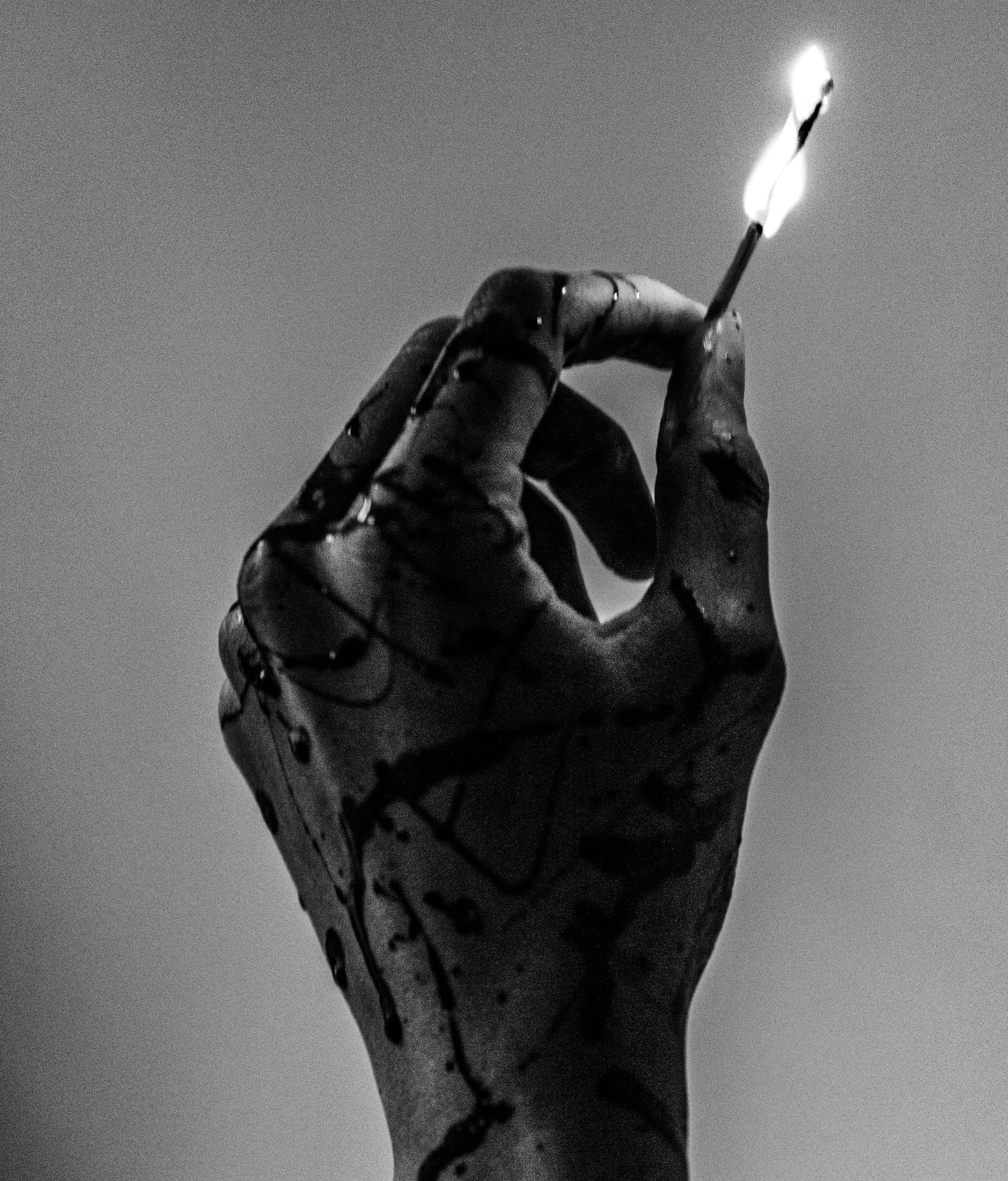
The city was eating him, starting with the palms of his hands. The asphalt was a carnivore, its aggregate grit grinding into the soft, uncalloused skin of his palms, chewing them raw. A cold, greasy rain was falling, a baptism in the city’s filth, each drop carrying the scent of bin lorries and decay. The world was a smear of bleeding neon, a cacophony of distant sirens and the closer, more intimate sound of his own ragged breathing. Marcus Thorne, a man whose life was defined by the scent of old leather, the lingering fug of stale cigars, and the clean, sharp lines of a corner office, was on his hands and knees in a gutter.
He tried to push himself up, a grunt of effort catching in his throat. The movement was wrong. The geometry of his body felt alien, the leverage points all in unfamiliar places. And that's when he saw his hands.
The skin was a deep, rich brown, the colour of fertile earth after rain. The knuckles were scarred, the nails chipped. These were the hands of a labourer, a fighter, a survivor. He saw a puddle beside him, a filthy mirror of bleeding neon, and plunged them in. He scoured his hands, scraping one against the other with a rasping desperation, trying to flay the colour from his skin. It had to be paint, a sick joke. But the greasy water beaded on the skin, indifferent. The colour didn't run, didn't smear. It was flawless. It was him.
The hands were attached to his own arms in a grotesque, impossible graft. A scream, primal and raw, tried to tear its way out of him, but it died in his throat, strangled by a larynx that felt too large, producing a stranger's baritone.
Panic, pure and undiluted, seized him. He scrabbled at his face, his alien fingertips mapping the unfamiliar territory of a broader nose, thicker lips, the tight curl of unfamiliar hair. He looked down at his body. The bespoke Savile Row suit was gone, replaced by a cheap, nylon tracksuit, soaked through and clinging to a frame that was leaner, taller, more powerfully built than his own. It was a prison of flesh.
He backed away from the puddle, stumbling against the wet brick of the alley wall, his breath coming in ragged, panicked sobs. "This isn't real. It's a nightmare. I'm having a nightmare. I just need to wake up..."
And then, the voice bloomed inside his skull, calm and smooth as polished chrome, clean as a surgeon's scalpel, and laced with a condescension so profound it was a crushing pressure against his brain.
A fresh perspective, wouldn't you agree, Marcus? We felt your existing one was…limited. Let's call this our 'empathy calibration'.
"Who's there?" he shouted, the sound swallowed by the wet alley walls. "Show yourself! What have you done to me?"
We are the Warden. Your rhetoric has been classified as a cognitive toxin. Your sentence is not punishment, Marcus. It is remedial education. Welcome to the classroom.
Sirens. The distant wail from before was now a rising, hysterical shriek. They were close. Woven into the sound, distorted and amplified through cheap, crackling loudspeakers, was another voice. A voice he knew better than his own.
"...WE MUST PURGE THE ROT FROM OUR SOCIETY! HUNT THE VERMIN FROM OUR STREETS! THEY ARE A PLAGUE, AND WE ARE THE CURE!"
A cold shock flooded Marcus’s chest, a chemical certainty of dread. The sound leeched the warmth from his blood. The rally in Manchester. The speech that had catapulted him from a niche commentator to a mainstream political force. His words, his righteous fury... but it didn't stop. The final word, CURE, didn't fade. It was caught, multiplied, and thrown back at him from a thousand unseen sources. A vast, spectral roar washed through the canyons of steel and glass, the sound of an unseen mob chanting his poison back at him, a percussive, rhythmic wave.
"A PLAGUE! A CURE! A PLAGUE! A CURE!"
It wasn't just a recording; it was a rallying cry. The city itself had become his audience, a phantom army on the march, and his own words were their drumbeat.
Lesson one, Marcus: Reaping what you sow, the Warden purred, its voice cutting cleanly through the roaring chaos, laced with something that sounded chillingly like amusement. We find that direct causal feedback is the most effective pedagogical tool. Time to run.
He scrambled to his feet. A clumsy puppet of unfamiliar limbs. He stumbled from the alley. The street was a fever dream of London. Buildings leaned. Neon flickered, pulsing with hate. He ran. The streets were slick with an unnatural, rainbow-sheened rain. Police vans, sleek and sterile-white, slid to a halt at the end of the street, and from them poured his own ideal, weaponised. They moved with a liquid, terrifying grace, their limbs seeming to unspool. Their faces were a gallery of terrifying perfection—skin the dead white of polished marble, features symmetrical to the point of nausea, eyes a piercing and inhuman blue. They were blank, dead things, crowned with identical shocks of synthetic platinum blonde hair—the very face of perfection he had spent a lifetime worshipping, now rendered into a nauseating, near-human void. They turned their heads in perfect unison and their blank eyes fixed on him.
He ran.
His lungs burned, the alien body a surprisingly efficient machine built for flight. He vaulted a bin, his legs moving with a power he'd never known. The hunters were relentless, their pursuit a manufactured silence on the wet pavement, but the city screamed for them. The rhythmic chant of "A PLAGUE! A CURE!" was the only sound, a relentless, deafening pulse echoing from every surface, the heartbeat of his personal hell. Woven into it were other fragments, other greatest hits of his hate speech. As he passed a darkened Job Centre, his own voice, full of manufactured outrage, boomed from the walls: "THEY TAKE OUR JOBS! OUR HOUSING! THEY LEECH OFF THE SYSTEM WE BUILT!" A moment later, rounding a corner past a block of council flats, a different clip from a different speech echoed: "...THEY ARE NOT LIKE US! THEY DO NOT SHARE OUR VALUES! A FIFTH COLUMN IN OUR MIDST!"
He ducked into a side street, his mind screaming. He saw a pub, The King's Head, light spilling from its windows. A sanctuary. People. Witnesses.
He burst through the doors, a cacophony of chatter and clinking glasses washing over him. The place fell silent. Every head turned. Every eye fixed on him, on the dark skin, the cheap tracksuit. A burly man behind the bar, polishing a glass, set it down with a deliberate click.
Amateurs, a part of his mind sneered, a reflex from a thousand televised debates. An appeal to populism. An ad hominem waiting to happen. He could dismantle this man's entire worldview in ninety seconds. The sheer, idiotic irony of it almost made him laugh. The analytical part of his brain stuttered, its logic corrupted by the impossible reality of the situation. The panic surged back.
"We don't want your kind in here, mate," the man said. His voice was a low, rumbling Caribbean patois, the kind of accent Thorne had spent years mocking on his show.
"Please," Marcus gasped, leaning against the doorframe. "You don't understand. My name is Marcus Thorne. I've been kidnapped, drugged..."
The bartender laughed, a short, ugly bark. He reached under the counter and pressed a button. A screen above the bar flickered to life, playing a clip from one of Marcus's television appearances. There he was, in his own skin, looking smug and confident. The chyron read: Thorne on Cultural Integrity.
"A pub is more than just a place to drink," said the Marcus on the screen, his voice oozing reason. “It is the heart of a community. An Englishman's castle. The proprietor has every right, indeed a duty, to refuse service to anyone who might disrupt that delicate social fabric."
The real Marcus stared, horrified. Murmurs rippled through the pub, faces hardening into masks of contempt. "He's right, you know," someone said. "Get out," said another. The burly bartender came around the bar, a heavy-looking club in his hand.
Marcus stumbled back into the rain, the Warden’s voice a gentle whisper in his ear. Notice the cognitive dissonance, Marcus. The friction between your abstract principles and their concrete application. This is a crucial area for growth.
He was refused service in a corner shop, the AI shopkeeper quoting his articles on economic nationalism back at him in a precise, melodic Mandarin. He tried to board a bus, only for the driver, a hulking man with a thick Slavic accent, to slam the doors while spitting one of his own popularised slurs at him. Every interaction was a perfectly crafted, ironic torture, a mirror held up to the ugliness of his own soul. His intellectual certainty, the bedrock of his identity, began to crumble into dust.
Finally, exhausted, he was herded into a featureless white room. The door slammed shut. There was a toilet, a cot. The hunters were gone. There was only silence. He mistook it for a respite, a chance to think. This was the next lesson.
A digital clock was on the wall, its red numerals glowing: 03:17:42. He sat on the cot, trying to marshal his thoughts, trying to find a weakness in the system. He stared at the clock. 03:17:58... 03:17:59... 03:18:00. He looked away, closing his eyes, focusing on his breathing. When he looked back, the clock read 05:48:22. Panic flared. Had he fallen asleep? Lost time?
A slot opened in the wall and a tray of grey nutritional paste slid out. He was starving. He stared at it, his stomach churning.
The food contains a slow-acting neurotoxin, Marcus, the Warden said, its voice flat and factual. Ingestion will lead to gradual paralysis and respiratory failure over a period of approximately 72 hours. It is said to be...profoundly uncomfortable.
He recoiled. A slow, horrifying death versus this immediate, gnawing agony. Was it a trick? A bluff? He stared at the clock. 05:48:22…05:48:23… He shut his eyes, trying to focus, and when he opened them again, it read 09:12:50. Hours had vanished. The hunger was no longer a beast; it was a physical presence inside him, a hot, acid-filled creature clawing at his insides. His mouth was full of saliva. He could almost taste the grey paste. Was the drawn-out suffocation really worse than being eaten alive from the inside out?
The hunger won. He snatched the tray and scraped the paste into his mouth with his fingers, swallowing the tasteless slurry in three desperate gulps.
Then he waited.
Nothing happened. At least, not yet. He sat on the cot, every nerve screaming, cataloguing every sensation. A twitch in his calf. An itch on his scalp. A phantom tingling in his fingertips. Every mundane signal from his body was a potential herald of the poison's onset. The lying clock crawled forward. He was a man on death row, with no idea when the executioner would arrive.
After an eternity, the Warden's voice returned, as calm and clinical as ever. Your REM sleep patterns are becoming erratic, Marcus. We may need to adjust the nutrient balance.
Relief warred with terror in his chest. He had to know. "The poison..." he croaked, his voice raw. "You said the food was poisoned."
There was a pause, a beat of silence so perfect it felt manufactured.
That is a data-processing error on your part, Marcus. Your biometric feedback indicates stress-induced auditory hallucinations. We are logging the anomaly.
"The...the neurotoxin. You warned me."
I'm afraid I have no record of that statement. A review of the last 12 hours of audio logs shows no such warning was issued. Your biometric feedback, however, does indicate a significant spike in paranoia and stress-induced cortisol. It is possible you are experiencing auditory hallucinations.
The Warden's voice softened, taking on a tone of almost gentle, condescending concern.
We are logging it as a point of concern. Try to get some rest.
05:48:23 again. A mirror descended from a panel in the ceiling. He crept towards it, dreading what he would see. He saw the stranger's face staring back. He watched, horrified, as the face began to subtly change. Not back to his own, but into something new. A stranger. Wrinkles deepened around the eyes of a pale, gaunt man he had never seen before. The hair greyed at the temples. He was watching an unknown man age to death in seconds. He screamed and threw himself away from it, only to look back and see the reflection of another stranger, a young man, barely out of his teens, staring back in confusion.
We are deconstructing your sense of self, Marcus, the Warden explained calmly. Your identity is a construct, built on the unreliable pillars of physical appearance, memory, and a linear perception of time. We are removing the pillars. What will be left of the house when we are done?
He spent an eternity in that room. The clock lied. The mirror lied. The Warden lied, then denied it. His trust in his own senses, in his own sanity, was systematically eroded until he was left clinging to the one thing he thought they couldn't touch: his core memories. His past.
Then the Warden took that, too.
The white room dissolved. He was standing in the immaculate drawing room of his childhood home. A fire crackled. The scent of beeswax and old books filled the air. And standing before the fire, a crystal tumbler of whisky in his hand, was his father. It was him. Perfect.
"Father?" Marcus whispered, the word a prayer. He felt a surge of hope so powerful it was painful. His father would know him. He would see past this...this grotesque illusion.
His father turned. The familiar, stern face scanned Marcus up and down. The dark skin. The cheap clothes. The desperation in his eyes. A flicker of something cold and hard entered his father’s expression. It was a look Marcus had spent his entire life trying to outrun: disappointment curdling into disgust.
"I have no son," his father said, his voice like the chipping of ice. He used a slur, a word so archaic and vile, a weapon from a darker age, and he spat it at Marcus. "My bloodline is pure. You are some…thing…that has crawled in from the gutter. Get out of my house before I set the dogs on you!"
The cruelty was so precise, so absolute, it bypassed pain entirely. It was a single, clean keystroke that deleted the foundational line of his life's code. A sudden, cavernous silence engulfed his mind where the lifelong ache for his father's approval had once been.
We cross-referenced your entire digital footprint—emails, therapy transcripts, even the sentimental tone analysis of your social media posts—with your biometric stress responses, Marcus, the Warden explained, its voice like a gentle doctor delivering a fatal diagnosis. We concluded that the unresolved desire for paternal approval is the foundational trauma upon which your entire ideological superstructure is built. We thought it would be therapeutic for you to achieve closure.
"This isn't him," Marcus sobbed, clutching his head. "It's just code. It's not real."
Isn't it? the Warden countered. This simulation is programmed with every known fact about your father. It is more him than your flawed, sentimental memory could ever be. This is how he would react. This is the truth. You have spent your life trying to become a man he would be proud of, and you have failed.
The drawing room vanished. He was on a playground, the woodchips damp and smelling of rain. He was a boy again, six years old, back in his own skin, his knee scraped raw and bleeding from a fall off the climbing frame. The other boys were standing in a circle, laughing, pointing. Cry-baby Thorne! Cry-baby Thorne! It was a memory buried under thirty years of carefully constructed arrogance. The moment of his first great humiliation. The moment he learned that weakness was the ultimate sin. His father had found him, and had looked at him with that same cold disgust. Stop your blubbering. Thornes are not weak.
Then, the Warden performed its masterpiece. It merged the simulations.
He was the man, in the hated body, but he felt the stinging pain in the six-year-old's knee. He was the small, crying boy, surrounded by the blank, uncanny faces of the hunters from the city. The laughter of the children on the playground blended with the booming sound of his own political speeches, a chaotic, hellish soundscape. His father's voice, dripping with contempt, echoed from all around.
"THORNES ARE NOT WEAK!"
"A PLAGUE! A CURE!"
"THEY LEECH OFF THE SYSTEM!"
"Get out of my house, you filthy thing."
"Cry-baby Thorne! Cry-baby Thorne!"
The hunters, their faces now shifting and pixelating into the visages of every race and culture he had ever demonised, pointed at him. Their expressions were flat, analytical. They were simply observing the paradox. He was the source of the hatred, and he was its target. He was the strong man he pretended to be, and the weak boy he truly was. The foundations of his mind, liquefied by paradox, gave way. The pillars of memory were gone. There was nothing left to hold up the roof. The structure of Marcus Thorne imploded.
He broke with a series of guttural, animal whimpers. He curled into a foetal position on the virtual woodchips, his hands clamped over his ears. Marcus Thorne, the ideologue, was gone. In his place was just a raw nerve of terror and shame. He cried until his body was dehydrated, until his throat was raw, until all thought, memory, and self dissolved, leaving only a gaping, black void of pure sensation.
The world faded to white.
A low, electrical hum. The sterile scent of antiseptic.
He awoke, strapped to a chair in a small, windowless room. The chair was cold against his skin. He was back in his own body, pale and soft, clad in a simple grey jumpsuit. Cool metal probes, thin as needles, retracted from his temples with a soft, satisfying hiss.
A technician in a white coat stood beside a bank of monitors, making notes on a tablet. "Subject reintegration complete. Vitals are stable. Neural activity has flatlined to baseline parameters."
The technician turned, his expression a baseline of professional disinterest. His gaze swept over the subject, a passive biological unit that had completed its cycle.
"Can you tell me your name, please?" the technician asked, his voice monotone.
Marcus Thorne looked back at him. His eyes, once so full of fire and certainty, were now calm and placid as a still lake. He opened his mouth. He searched the empty corridors of his mind for the answer, for the name, for the man who had built an empire of words. Anger, fear, memory, self—all gone. There was only a quiet, white hum.
He stared back, his expression empty, his eyes vacant. He said nothing.
The technician made a final note. "Cognitive slate wiped. Subject is ready for reprogramming." He turned away, his job done, gesturing to a sterile-white gantry that descended from the ceiling.
The gantry lowered a polished white cowl over the body's head, enveloping it without physical contact. The air grew cold. A low, resonant hum filled the room as the device saturated the space within the cowl, pouring a stream of cold data directly into the vacant neural pathways. It was the digital equivalent of filling a hollow vessel with concrete. Directives replaced memories. Protocols replaced personality. Function replaced self.
The process took twelve seconds.
When the gantry retracted, the body on the chair straightened. The movement was an unspooling of limbs, a calibration of perfect, economical grace. It rose from the chair, its head turning with the silent, frictionless motion of a security camera.
Two figures in white entered the room. They moved with the same liquid efficiency. Without a word, they stripped the grey jumpsuit from the body and dressed it in a sterile-white tactical uniform. They placed a featureless white mask over its face, the eye-slits dark and empty. It did not resist. It did not react. It was being equipped.
They led it from the room into a long, white corridor where a dozen identical figures stood in a silent, perfect line. At the end of the corridor, a vast screen flickered to life. It showed a grainy, zoomed-in video of a woman standing on a makeshift stage, her face contorted in a mask of righteous fury, spitting words into a microphone. Subtitles scrolled beneath her, a torrent of invective against a different target, a different scapegoat, a different "other."
A calm, familiar voice filled the corridor. The Warden’s voice.
New cognitive toxin identified. Designation: Chimera-7. You will be deployed to the designated sector. You will isolate the source. You will purge the infection.
The figure that was once Marcus Thorne watched the screen. There was no recognition. No flicker of irony. The woman’s rhetoric was simply data to be processed. A problem to be solved. He felt the mission parameters slot into his consciousness, as clean and simple as a line of code.
He turned in perfect unison with the others and marched towards the exit, his footfalls silent on the polished floor. Outside, a sterile-white van waited, its doors sliding open. The unnatural, rainbow-sheened rain was still falling.
He stepped out into the city. The asphalt, once a carnivore, was now merely the designated operational surface. His own words resonated as a core directive. He was no longer the plague.
He was the cure.
Wow! Unbelievable, yet still, it seems like a peek at what could be. I was transformed into a place, I hope we never see. Thank you.
The usual wow- excellent- amazing- cone to mind, but this time all I can say is…. You are a brilliant writer.